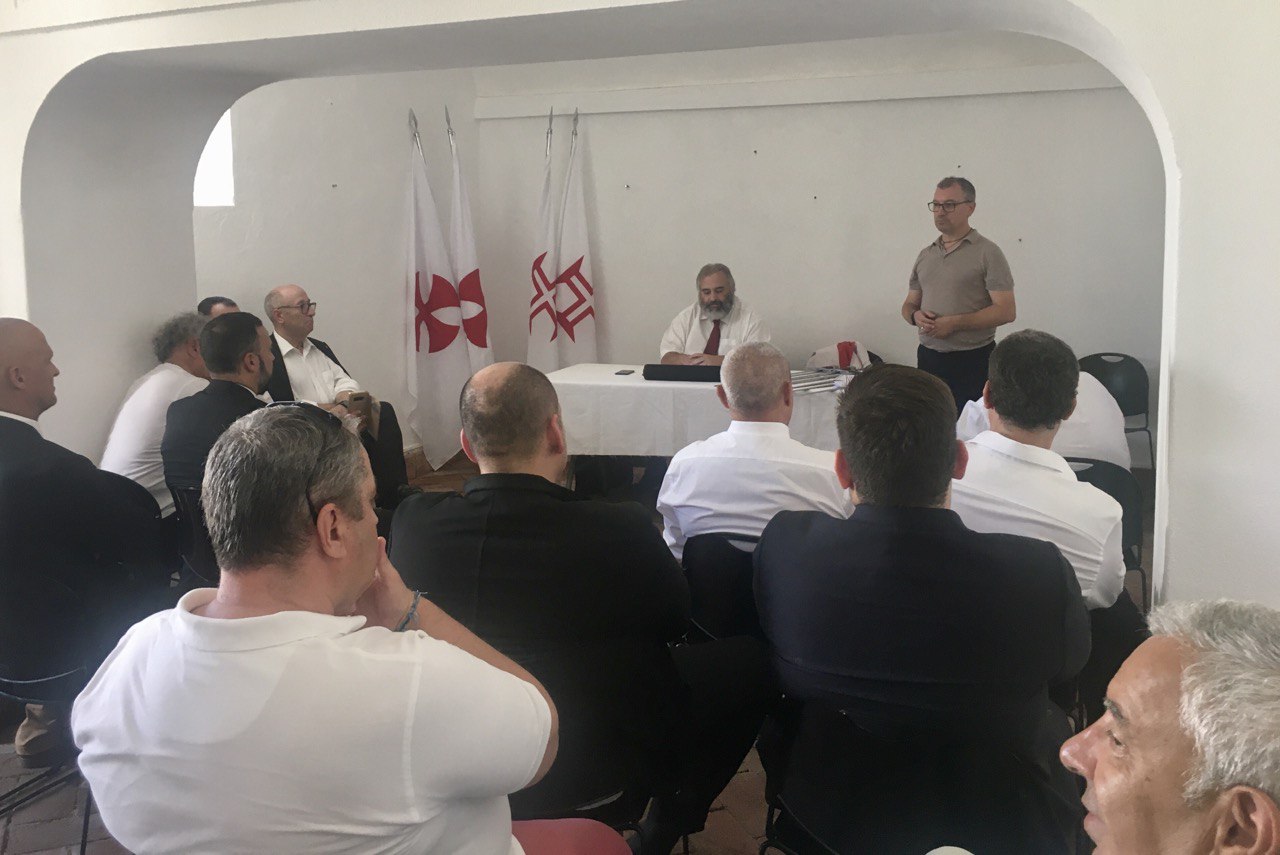
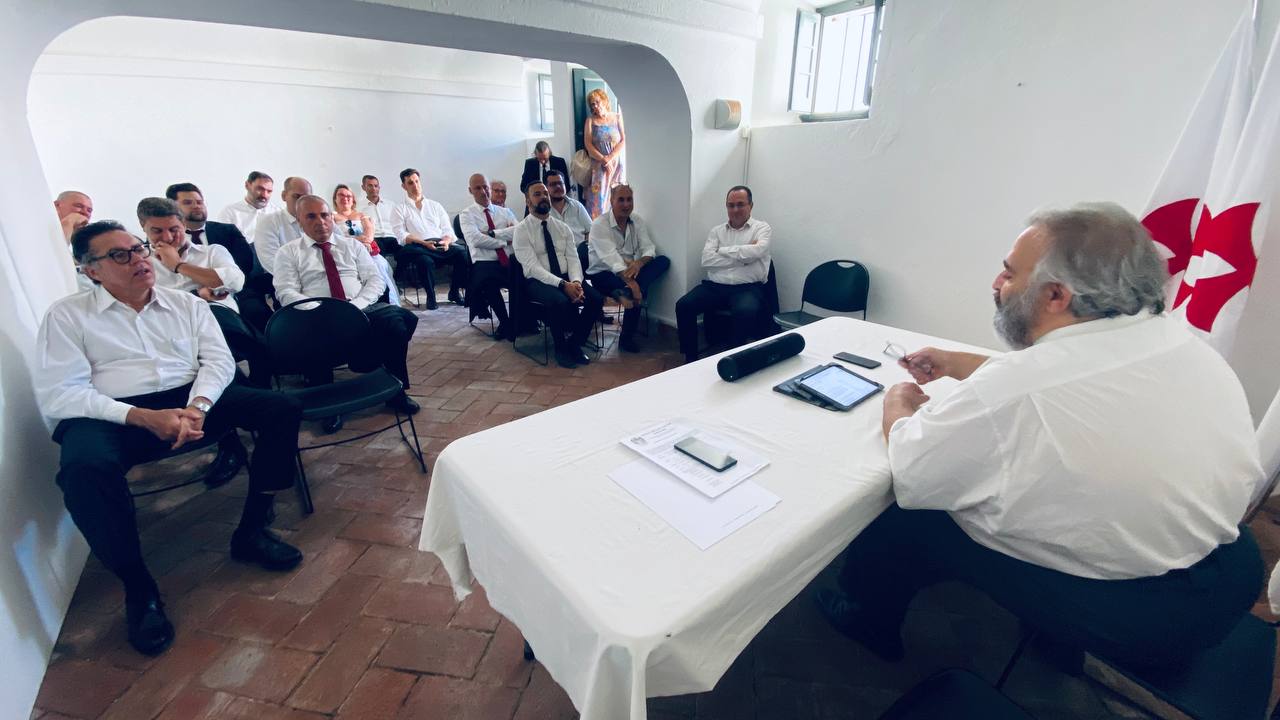
Lagos, Algarve – A Ordem do Templo OSMTHU reuniu uma série de conferências no dia 2 de março, trazendo diversos oradores que exploraram temas relacionados com a simbologia, a identidade nacional e desafios éticos. O evento contou com palestras de especialistas em diferentes áreas, proporcionando uma visão abrangente e aprofundada sobre temas relevantes. Abaixo, apresentamos um resumo das intervenções:
Pe. José Manuel Pacheco – “Símbolos e a Liturgia”
Explorou símbolos do Novo Testamento, com destaque para a transfiguração.
Abordou a presença de símbolos na liturgia, como as cinzas no início da quaresma.
Refletiu sobre a importância da imagem e o papel da comunicação social na disseminação de símbolos.
Concluiu incentivando a promoção da paz.
Jaime Ramos – “Organizações Morais e Desafios Nacionais”
Analisou o papel das organizações morais na sociedade, destacando eventos históricos em Portugal.
Abordou desafios atuais, como o envelhecimento populacional e a desertificação do interior do país.
Refletiu sobre a importância de debater temas fundamentais, mesmo aqueles considerados politicamente sensíveis.
Propôs a necessidade de preservar a memória histórica.
Luis Alves Costa – “Instrução versus Formação – Uma Perspectiva do Ensino”
Diferenciou instrução (aquisição de conhecimento) e formação (desenvolvimento do ser).
Destacou a responsabilidade compartilhada na educação, não sendo exclusiva da escola.
Apontou a desconexão dos estudantes com símbolos nacionais e a língua, enfatizando a importância do significado.
Recordou que os símbolos são a linguagem cifrada das aspirações humanas
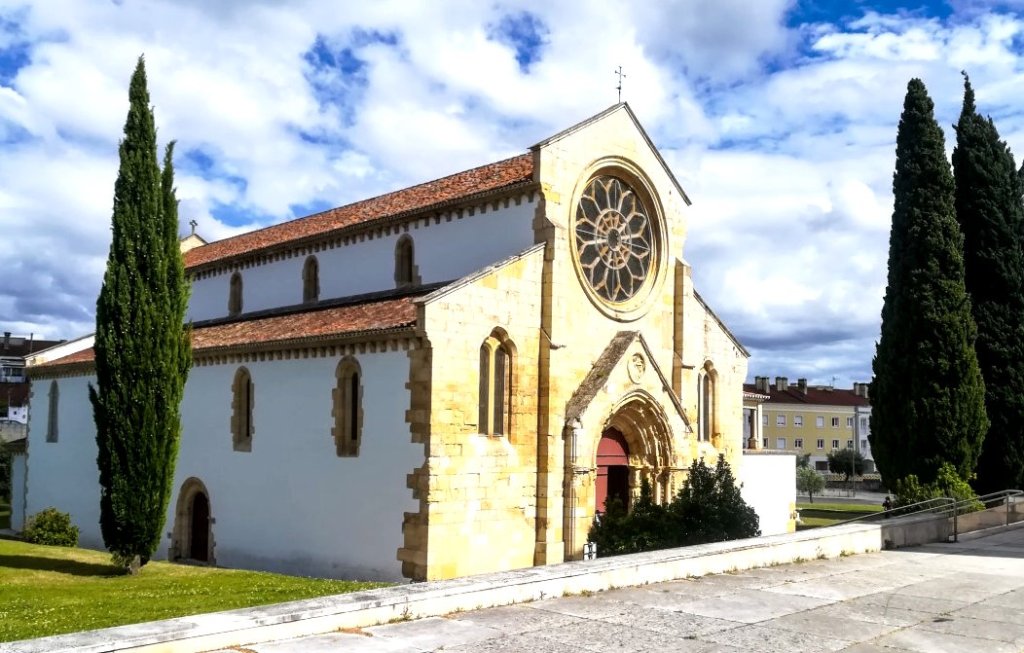
Utilizou o exemplo da igreja Santa Maria do Olival para ilustrar mudanças simbólicas no tempo.
Nuno Campos Inácio – “Simbologia Imaterial”
Explorou a simbologia imaterial, incluindo tradições, rituais, e eventos festivos.
Enfatizou a universalidade das festividades, que transcendem barreiras religiosas.
Destacou a importância de preservar esse património imaterial.
Sublinhou que a essência das festividades é universal e não está limitada às várias religiões. As festividades transcendem-nas. Celebram uma realidade que é mais vasta do que elas.
Pe. Carlos Aquino – “Simbologia na Liturgia e Experiência Viva”
Abordou a visão do Papa Francisco sobre símbolos e a importância de tornar-se capaz de entendê-los.
Destacou que a liturgia é composta por sinais e símbolos que conduzem à experiência viva.
Enfatizou a autenticidade dos símbolos na comunicação do mistério.
Defendeu que o homem moderno se tornou analfabeto e já não consegue ler os símbolos, questionando como podemos tornar-nos “capazes de símbolos”. Não se trata só de fazer uma interpretação intelectual, mas de a tornar numa experiência viva.
Manuel J. Gandra – “O Símbolo e Seu Significado”
Analisou o símbolo como sinal de reconhecimento, considerando elementos como a direção de leitura.
Explorou a interpretação neo-platônica do símbolo visível como reflexo de uma realidade invisível.
Refletiu sobre a subversão de símbolos e suas consequências., dando abundantes exemplos depois de ter mostrado o mesmo simbolismo na iconografia tradicoinal.
Concluiu afirmando que a subversão dos símbolos leva à subversão das ideias
Artur de Jesus – “Identidade Nacional e Símbolos”
Criticou a falta de conhecimento sobre os símbolos nacionais, defendendo a necessidade de ensinar a identidade portuguesa nas escolas.
Explicou o significado dos símbolos nacionais, como a bandeira e a esfera armilar.
Ressaltou a importância de respeitar e preservar a herança cultural e histórica. A perda dos símbolos é o empobrecimento da nossa herança.
Luis Natal Marques – “Desafios Éticos da Inteligência Artificial”
Questionou a compreensão de Deus e explorou as leis que governam a nossa existência.
Abordou os desafios éticos da inteligência artificial, incluindo a questão das emoções das máquinas.
Ressaltou o papel da ética diante das novas tecnologias.
Concluiu com um desafio: todo (o ser humano) é mais do que o simples somatório das partes de que é feito; Assim, se todos os órgãos que nos compõem têm uma finalidade, qual é, afinal a nossa própria finalidade?
Rui Lomelino de Freitas – “Sofia Perene – O Despertar Interior Através do Símbolo”
Apresentou o conceito de Sofia Perene, destacando o símbolo como meio de despertar interior.
Questionou o significado pessoal dos símbolos e a jornada da imagem ao conceito.
O conceito deve levar à experiência, caso contrário é estéril
O evento em Lagos proporcionou uma rica troca de ideias sobre simbologia, identidade nacional e desafios éticos, contribuindo para uma compreensão mais profunda desses temas fundamentais.
Um agradecimento muito reconhecido a Todos os participantes que se associaram a este nosso propósito de doar bens alimentares a uma instituição de apoio social.
Este é o resultado das doações de Todos vós nas Jornadas:
2 óleo
2 azeite
6 atum em lata
1 leite aveia
2 bolacha Maria – embalagens de 4 pacotes
2 açúcar
2 farinha
3 salchicha em lata
5 Macarrão
7 esparguete
24 arroz
5 grão
2 feijão
2 feijão em lata
1 amêndoas de chocolate
A Todos os participantes e aos doadores o nosso obrigado.
O evento terminou com uma doação de sangue no Hospital de Portimão no dia 3 demarço.
“Turismo Histórico Sustentável: Preservar e Abrir é Compatível?”
4 de Novembro, 15h | Online
Participação Gratuita
Pedir link para: conference@templarcorps.org
O Turismo Histórico Sustentável vive de um equilíbrio delicado entre a preservação do património histórico e o seu acesso com qualidade e liberdade por todos os que o buscam. A preservação é essencial para manter viva nossa herança cultural e histórica, permitindo que as futuras gerações desfrutem dela. No entanto, abrir esses locais ao turismo é igualmente importante, pois proporciona uma compreensão mais profunda do passado e impulsiona o desenvolvimento económico. O turismo em massa pode ameaçar todo o ecossistema. A chave estará em adoptar práticas de turismo responsável, minimizando o impacto ambiental e respeitando as comunidades locais. Quem já passou mais de uma hora para comprar um bilhete de acesso a um monumento nacional sabe como este é um debate urgente. Junte-se a nós no próximo Sábado.
A truly admirable day of Chivalry took place this weekend in Lagos, Portugal, where the ranks of the Secular Temple, under the OSMTHU, keep growing and getting stronger, bringing to life a unique contemporary view of Templarism, firmly rooted in the past tradition of immutable values, yet with the eyes unapologetically looking on to the future.
The weekend long activities took place on the historical Forte da Ponta da Bandeira, vigilant over Lagos’s harbor, seating in the strategic location where Prince Henry the Navigator’s Caravels took to the sea in search of Prester John and a world of unknown dangers and fears.
On Friday Fr+ Luis de Matos, Grand Prior of Portugal and Chancellor of the Magisterial Council of the OSMTHU under Master Antonio Paris, in a speech took a long and detailed look at Templar History, comparing it to the several states of the primary Greek elements of matter, from the dense Earth stage, when the Order gathered territory and land, to the Water stage with the building up of the Templar Fleet, to the Air and Fire stages with the imprisonment of the Master in Paris and the martyrdom of March 1314 by fire. In parallel, the History of Portugal, with a similar cycle, heavily influenced by the Order of the Temple during the Earth stage of consolidating the Portuguese territory and the Water stage with the Discoveries launched by the Order of Christ, was also remembered. Fr+ Matos has drawn surprising analogies and comparisons, moving on to an inevitable progression in which Order and Nation share a joint Destiny. The discussion that followed was fascinating, with the audience participating and engaging with the subject in a very illuminating and enthusiastic way.
The program for the next day had to be changed due to unforeseen circumstances. The Mayor of Lagos was presiding over the Graduation Ceremony of the Templar Corps Class of First Responders and Forest and Urban Fore Support, however the Portuguese Civil Protection Authority activated the Delta Level of the National Operational Directive on Rural Fire Prevention on June 30, actively summoning all available Templar Corps graduates that are on their stations at the service of the National Authority, ready to spring into action. The rural and forest fire season of 2023 is feared to be the most dangerous of the last few years due to the severe draught that affects the country and particularly the Algarve region, where the Templar Corps headquarters are located. The ceremony will take place at the end of October.
In the afternoon the new Candidates to the Order gathered at the Fortress for the final training and orientation session. Presided over by Grand Prior F+ Luis de Matos, the letter that had been sent to the Candidates a few days before was read and explained in detail. Everyone had the opportunity to clear all doubts on the historical and philosophical tenets of the Order. Questions about the organization, formality and structure were also addressed.
After a short recess for refreshments, a discussion on the role of the Order, today, took place. History and the past tense is usually the frame of reference for the Templars, however the OSMTHU, acknowledging the past, always moves the discussion to the present and tries to anticipate the future. Practice makes perfection. A Knight truly emerges in the real world, out of practice and action. It’s not a matter of speculation, phantasy or role playing.
Dinner took place in the Refectory of the Portuguese Army in Lagos, in a spartan environment intended to prepare the Candidates to the poor life in a Order that defined itself as the Poor Knights of Christ.
As night fell, Brothers and Sisters of the OSMTHU, Candidates and invited guests, including family, gathered in one of the largest vaulted rooms of the Fortress. The turnout was so large that last moment arrangements had to be made to accommodate everyone.
Local Lagos authorities were represented by Drª Helena Moran, Archeologist of the Mayor’s Office and Director of the Municipal Museum of Lagos, that includes jurisdiction of the Forte da Ponta da Bandeira. Commander Fernandes da Palma, Port Captain of Lagos was also present.
The ceremony was opened by the Grand Prior with the assistance of Fr+ Paulo Valente, KGCTJ, Commander of Sintra and Fr+ Victor Varela Martins, KGCTJ, Commander of Laccobriga. Fr+ Valente gave a short speech about the solemn moment that was about to be enacted.
The Grand Prior invited everyone to enjoy a moment of introspection while lute player, and long time collaborator of the Order, Eduardo Ramos masterfully execute a few beautiful songs that transported everyone to a holy place, out of time and space. The Grand Prior said that Templar ships sailing from Lisbon, and later from Lagos, heading to the Holy Land, taking the rout of Gibraltar and Northern Africa, would have musicians on board as a way to engage in dialogue with populations on their way. When they disembarked on the shores of Tripoli in search of water and provisions, music would be their first connection. The lute was known and played by Christians and Muslims. Melodies were exchanged and harmonies achieved. Then came language. And only then commerce. And off to Cairo, with the lute on their shoulders.
Then the Grand Prior gave a final explanation about the degrees of the Order and how they are structured, describing in detail what the accolade, or “armament” (to give arms), its context in medieval history and modern validity and equivalent.
Each of the Candidates, one by one, came to the altar and proceeded to read out loud the Commitment of the Order.
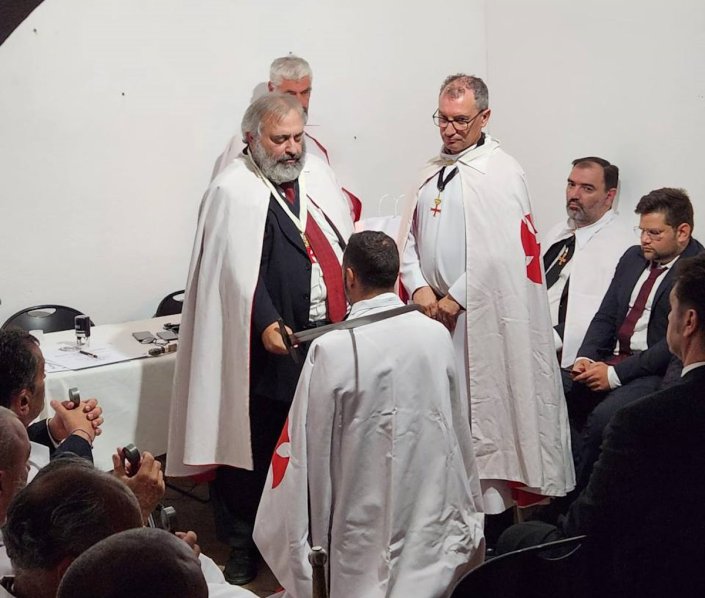
Then the Master of Ceremonies brough the Candidates, again one by one, to the center, in front of the altar, where they were kneeled. They were covered with the mantle of the Order and then armed by the Grand Prior in the traditional manner, using the traditional forms and words. This having been done, the new Knight rose and was decorated with the Templar Cross, given his certificate, the Liber Novitius published by the Preceptory of the Order, where all the information that had been part of the training stage, is now accessible in written form, and welcomed into the Order with a fraternal embrace.
After the completion of the ritual for each and everyone of the Candidates, the Grand Prior revealed the powerful and deep symbolism that is the basis for every gesture and word of that simple, but meaningful liturgy. He also told the new Knights that they hadn’t arrived, rather they were only starting their journey. He invited them all to study further to fully become a Knight of the Temple, with the completion of the armament with the vigil and reception in the House of the Temple.
“The traces of the Templars are still there. Today we go to Tomar, Almourol, Pombal and many other Templar places and admire their legacy in architecture and art”, said the Grand Prior; “Chesterton wondered why the derelict neighborhoods of London were not as beautiful as Florence”, he proceeded; “His realization was interesting, he said nobody loved the derelict neighborhoods of London, but someone loved Florence, as if anyone had loved the derelict neighborhoods of London the way Florence was loved, the derelict neighborhoods of London would become Florence! That is the power of love. The Templars transformed every place where they happened to pass. We now go after their steps, we look for Templar places, to witness their every trace, a Templar Cross on a slab of stone, a small Templar church, a mighty Templar Castle. The legacy. It’s your turn now. Go and love the derelict neighborhoods you may come across, like a Templar. Turn them into Florence. Leave a trace of your love. Transform the world around you and make it a better place because you have been there. Be the cause of love in others so that the next generations come after you and say of your work: here stood a Templar! Leave your mark so that the can say: I’m now inspired to follow on these steps.”
Before closing, Fr+ Jorinho Manuel was remembered. He passed on to the House of the Father after a long struggle with cancer. The Non Nobis of the day was sung on his homage. The night ended with everyone enjoying the sweet fruits of fraternal love. An overwhelming joy was felt by the Knights, guests and families. Many decided to extend the night in celebration, walking the promenade alongside the river of Lagos in groups, or taking a few drinks with the new found brothers on the many pubs that were still opened. Others returned to their homes, driving a few hundred miles, or their hotels just nearby.
In common the same sense of fulfilment and joyful bliss.
Welcome to the Templar Order my Brothers. Now it’s time to work.
[EM PORTUGUÊS]
Um dia de celebração da Cavalaria verdadeiramente admirável teve lugar este fim-de-semana em Lagos, Portugal, onde as fileiras do Templo Secular, sob a OSMTHU, continuam a crescer e a fortalecer-se, dando vida a uma visão contemporânea e única do Templarismo, firmemente enraizada na tradição do passado, de valores imutáveis, mas com os olhos voltados para o futuro sem precisar de pedir desculpas.
As actividades do fim de semana decorreram no histórico Forte da Ponta da Bandeira, vigilante sobre o porto de Lagos, assentado no local estratégico onde as Caravelas do Infante D. Henrique se lançaram ao mar em busca do Prestes João e de um mundo de perigos e medos ainda desconhecidos.
Na sexta-feira, o F. Luís de Matos, Grão-Prior de Portugal e Chanceler do Conselho Magistral da OSMTHU sob a regência do Mestre António Paris, em Conferência deu um longo e detalhado olhar sobre a História Templária, comparando-a com os vários estados da matéria dos elementos gregos clássicos, desde a fase da Terra densa, quando a Ordem acumulou territórios e terras, à fase das Águas com a formação da Frota Templária, às fases do Ar e do Fogo com a prisão do Mestre em Paris e o martírio de Março de 1314 pelo fogo. Paralelamente, foi também recordada a História de Portugal, com um ciclo semelhante, fortemente influenciado pela Ordem do Templo durante a fase da Terra de consolidação do território português e a fase da Água com os Descobrimentos, lançados pela Ordem de Cristo. O Fr+ Matos traçou analogias e comparações surpreendentes, avançando para uma inevitável progressão em que Ordem e Nação partilham um Destino comum. A discussão que se seguiu foi fascinante, com um público participante e envolvido de uma forma muito esclarecedora e entusiasta.
O programa para o dia seguinte teve que ser alterado devido a circunstâncias imprevistas. O Presidente da Câmara Municipal de Lagos presidia à Cerimónia de Formatura da Classe do Corpo Templário de Socorristas e Apoio Florestal e Urbano. No entanto a Protecção Civil portuguesa activou o Nível Delta da Directiva Operacional Nacional de Prevenção de Incêndios Rurais no dia 30 de Junho, convocando activamente todos os formandos do Templar Corps disponíveis, que se encontram nos seus postos ao serviço da Autoridade Nacional, prontos a entrar em acção. A época de incêndios rurais e florestais de 2023 teme-se ser a mais perigosa dos últimos anos devido à forte seca que afecta o país e em particular a região do Algarve, onde se situa a sede do Corpo Templário. A cerimónia acontecerá no final de Outubro.
À tarde, os novos Candidatos à Ordem reuniram-se na Fortaleza para a sessão final de formação e orientação. Presidida pelo Grão-Prior F+ Luís de Matos, foi lida e detalhadamente explicada a carta enviada aos Candidatos dias antes. Todos tiveram a oportunidade de tirar as suas dúvidas sobre os temas históricos e filosóficos da Ordem. Questões sobre organização, formalidade e estrutura também foram abordadas.
Após um breve intervalo para descanso, passou-se a uma discussão sobre o papel da Ordem hoje. A história e o passado são geralmente o quadro de referência para os Templários, no entanto, a OSMTHU, reconhecendo o passado, procura trazer a discussão para o presente e tenta antecipar o futuro. A prática traz a perfeição. Um Cavaleiro real surge no mundo real, da prática e da acção. Não é uma questão de especulação, fantasia ou role-playing.
O jantar decorreu no Refeitório do Exército Português em Lagos, num ambiente espartano destinado a preparar os Candidatos para a vida pobre numa Ordem que se definia como os Pobres Cavaleiros de Cristo.
Ao cair da noite, irmãos e irmãs da OSMTHU, candidatos e convidados, incluindo familiares, reuniram-se numa das maiores salas abobadadas da Fortaleza. A afluência foi tão grande que arranjos de última hora tiveram que ser feitos para acomodar todos.
As autoridades locais de Lagos estiveram representadas pela Drª Helena Moran, Arqueóloga da Câmara Municipal e Directora do Museu Municipal de Lagos, que inclui jurisdição do Forte da Ponta da Bandeira. Também esteve presente o Comandante Fernandes da Palma, Capitão do Porto de Lagos.
A cerimónia foi aberta pelo Grão Prior com a assistência do F+ Paulo Valente, KGCTJ, Comendador de Sintra e do F+ Victor Varela Martins, KGCTJ, Comandante de Laccobriga. O F+ Valente fez um breve discurso sobre o momento solene que estava para acontecer.
O Grão Prior convidou todos a desfrutar de um momento de introspecção enquanto o músico, e de longa data colaborador da Ordem, Eduardo Ramos, executou com maestria algumas belas canções no alaúde tradicional, que transportaram todos os presentes para um lugar sagrado, fora do tempo e do espaço. O Grão-Prior disse que os navios Templários que partiam de Lisboa, e depois de Lagos, com destino à Terra Santa, fazendo a rota de Gibraltar e do Norte de África, teriam músicos a bordo como forma de dialogar com as populações no caminho. Quando desembarcavam na costa de Trípoli em busca de água e mantimentos, a música era o primeiro contacto de culturas. O alaúde era conhecido e tocado por cristãos e muçulmanos. Naquele tempo, melodias foram trocadas e harmonias alcançadas. Depois veio a lingua. E só então o comércio. E depois, vamos de saída para o Cairo, com o alaúde aos ombros.
Em seguida, o Grão Prior deu uma explicação final sobre os graus da Ordem e como eles são estruturados, descrevendo detalhadamente o que é a armação (de “dar armas”), o seu contexto na história medieval e a sua validade e equivalência moderna.
Os Candidatos, um a um, aproximou-se do altar e procedeu à leitura em voz alta do Compromisso da Ordem.
De seguida, o Mestre de Cerimónias trouxe os Candidatos, novamente um a um, para o centro, em frente ao altar, onde foram ajoelhados. Foram então cobertos com o manto da Ordem e depois armados pelo Grão Prior da maneira tradicional, usando as formas e palavras tradicionais. Feito isto, o novo Cavaleiro ergueu-se e foi condecorado com a cruz Templária, tendo-lhe sido conferido o seu certificado, o Liber Novitius publicado pela Preceptoria da Ordem, onde todas as informações que fizeram parte da fase formativa estão agora acessíveis em forma escrita, e acolhido na Ordem com um abraço fraterno.
Após a conclusão do ritual para todos e cada um dos Candidatos, o Grão-Prior revelou o poderoso e profundo simbolismo que está na base de cada gesto e palavra desta liturgia simples, mas significativa. Disse ainda aos novos Cavaleiros que eles não haviam chegado ou cortado uma meta, mas que estavam apenas a começar a jornada. Convidou todos a estudarem mais para se tornarem plenamente Cavaleiros do Templo, com a conclusão do armamento com a vigília e recepção na Casa do Templo.
“Os vestígios dos Templários ainda existem. Hoje vamos a Tomar, Almourol, Pombal e muitos outros lugares templários para admirar o seu legado na arquitectura e na arte”, disse o Grão-Prior; “Chesterton perguntou-se por que os bairros degradados de Londres não eram tão belos como Florença”, prosseguiu; “A sua explicação é interessante, ele disse que ninguém amou os bairros degradados de Londres, mas alguém amou Florença, porque se alguém tivesse amado os bairros degradados de Londres como Florença foi amada, os bairros degradados de Londres tornavam-se Florença! Esse é o poder do amor. Os Templários transformaram todos os lugares por onde passaram. Agora seguimos os seus passos, procuramos os lugares dos Templários, para testemunhar todos os seus vestígios. Uma cruz Templária numa laje de pedra, uma pequena igreja Templária, um poderoso Castelo da Ordem. É o seu legado. Agora é a vossa vez. Vão e amem os bairros degradados que possam encontrar, amem como um Templário. Transformem-nos em Florenças. Deixem um rasto vivo do vosso amor. Transformem o mundo ao vosso redor e tornem-no num lugar melhor porque por lá passaram. Sejam a causa do amor nos outros para que as próximas gerações, que venham depois de vós, digam do vosso trabalho: aqui esteve um Templário! Deixem a vossa marca para que possam dizer, inspirados: quero seguir seguir estes passos.”
Antes de encerrar, o F+ Jorinho Manuel foi lembrado. Regressou à Casa do Pai depois de uma longa luta contra o cancro. O Non Nobis foi cantado em sua homenagem. A noite terminou com todos saboreando os doces frutos do amor fraterno. Uma alegria imensa sentia-se no ar, partilhada por Cavaleiros, convidados e familiares. Muitos decidiram prolongar a noite em festa, passeando em grupos pelo passeio ribeirinho de Lagos, ou tomando uns copos com os novos irmãos nos muitos pubs que ainda estavam abertos. Outros voltaram para suas casas, fazendo algumas centenas de quilómetros ou regressando aos seus hotéis nas proximidades.
Em comum, a mesma sensação de realização, felicidade e alegria.
Bem-vindos à Ordem do Templo, meus irmãos. Agora é hora de trabalhar.
The 16th century Monastery of Saint Francis, in Palma del Rio, Cordoba, was the sacred location chosen by the Grand Priory of Spain of the OSMTHU to convene and commemorate Saint John’s feast. For three days, the brothers and sisters immersed themselves in the medieval atmosphere of the Convent.
The convent has a rich history and a beautiful heritage. Today the large volumes of its chapels are preserved around the central nave where there are echoes of structures that have been superimposed. We can see a unit, which formed the chapel of the Souls with a Gothic vault with straight and curved ribs, which are decorated with studs next to a Plateresque arch. The church is from the 17th century, restored after the Civil War. Today it has the chapels of Jesus en la Oración en el Huerto, the chapel of the Virgin of Bethlehem, the chapel of San Antonio, the chapel of the Holy Burial, the Cívico family pantheon and the chapel of Santa Gema.
The Grand Priory of Spain has three new knights. A delegation of the OSMTH – Magnum Magisterium of Toledo was present. Four brothers from the Grand Priory of Portugal OSMTHU were also present, including the Grand Chancellor of the Order. Fr+ Leslie Payne, Grand Prior of England and Wales, a long lasting friend of the Spanish Grand Priory, was also present at the event.
Fr+ Domenico Romano, KGOTJ was installed as Grand Prior of Italy OSMTHU by Master António Paris this past 24 of June, day of the feast of Saint John the Baptist. The ceremony took place at the Convent della Pietá in Teggiano, is Salerno, Campania, Italy.
At the same ceremony new Bailiffs, Commanders and Grand Officers were installed, preparing the Grand Priory of Italy for the upcoming few years, leading a few projects to be announced in the contexto of the OSMTHU and the Templar Corps International.
On the summer solstice of 2023, the Templar Order (Grand Priory of Croatia O.S.M.T.H.U.) and “Fratres Draconic Croatici” joined forces in Zagreb to propagate knowledge of the modern Templar Order and its history.
“Fratres Draconis Croatici” society is a legal successor of the “Order of the Dragon” from 15th century and actively works in Zagreb ever since 16th of November 1905.
Lecture was hosted in Fratres Draconis Croatici headquarters at the Stone Gate, historical place in the very center of Zagreb and moderated by Božo Skoko PhD, a full professor at the Faculty of Political Sciences in Zagreb.
The guests were Grand Prior of Croatia Lovro Tomašinec, Marija Karbić PhD – scientific advisor at the Croatian Institute of History and Damir Karbić – manager of the Departmant of Historical Sciences of HAZU.
History experts Marija and Damir Karbić PhD gave an extensive lecture about history of Templars in Croatia and their influence on Croatian soil, which formerly was a Templar province of Hungaria.
Grand Prior Lovro Tomašinec continued the lecture elaborating the circumstances that led to the fall of Templar Order, their survival in different organisations after “the fall” and finally the rise of a modern Templar Order founded by Fabre-Palaprat in 1804.
This significant cooperation in form of a lecture between two chivalry Orders with extensive and prestigious history, shows us that there is still a need within society to preserve knowledge and valuable teachings of history, carry them on and cherish the values they intend to perpetuate.
O Projecto do Diploma dos Castelos Templários de Portugal realizou mais um activação que decorreu entre os dias 19 e 21 de Maio de 2023. Desta vez as actividades centraram-se no Castelo de Montalvão, que se junta assim a uma larga lista de fortificações Templárias ligadas à vasta rede de Rádioamadores do mundo inteiro.
O Fr+ António Gil, KTJ, principal animador da iniciativa
Diploma dos Castelos Templários de Portugal
É um programa e um projecto dedicado ao Rádio-Amadorismo, idealizado e realizado por Amadores de Rádio titulares de Licença de Radiocomunicações de Amador com um interesse particular na Ordem do Templo e no seu legado edificado em Portugal, que desde 2018 tem vindo a levar o nome de Portugal e da Ordem do Templo aos quatro cantos do mundo.
Os Amadores desenvolvem projectos temáticos para promover as comunicações entre diferentes partes do mundo, em que o uso dos rádios de Amador servem de ponte para aproximar culturas, pessoas e estreitar laços entre aqueles que se dedicam ao Rádio-Amadorismo. Foi com o objectivo de divulgar o vasto e rico Património material da Ordem do Templo existente em Portugal que dois Amadores – CT7ABF e CT2ISX – idealizaram a criação deste Diploma, aos quais se juntaram outros Amadores e não-Amadores de rádio. O Diploma será atribuído a todos aqueles que efectivem um conjunto mínimo de contactos rádio (confirmados através da troca de cartão QSL) sempre que seja “activado” um determinado castelo (constante do Regulamento).
Para além do Diploma (objectivo máximo a alcançar por aqueles que o almejam) o Projecto atribui um Cartão QSL a todos os contactos estabelecidos em cada activação de cada Castelo Templario.
A OSMTHU ofereceu a sua chancela para atestar a idoneidade e o reconhecimento da Ordem a este nobre e interessante projecto. Pelo que o Diploma e os Cartões QSL seguem com o Brasão de Armas da Ordem e do Grão-Priorado de Portugal. Da mesma forma incentivamos os Rádio-Amadores de todo o mundo a participarem nas activações dos diferentes castelos Templários Portugueses que periodicamente recebem os Amadores e os seus equipamentos de rádio e que estabelecem comunicações de dentro do espaço do Castelo até um qualquer ponto do planeta onde esteja um interlocutor interessado em conhecer Portugal, o Castelo e a Ordem dos Templários.
Quando a Sociedade Civil quer e é apoiada, suportada, coisas boas podem ocorrer.
Lista dos Castelos Templários Portugueses activados para o mesmo Diploma.
– Torre Templária da Quinta da Cardiga.
Com indicativo especial CS2 TTC, em 12/10/2018, a 14/10/2018.
– Castelo Templário de Castelo Novo.
Com indicativo especial CS2 TCN, em 7/12/2018 a 9/12/2018.
– Castelo Templário de Soure.
Com indicativo especial CS2 TCS, em 22/03/2019 a 24/03/2019.
– Castelo Templário de Tomar.
Com indicativo especial CS2 TCT, em 22/03/2019 a 24/03/2019.
– Castelo Templário de Santarém.
Com indicativo especial CS2 CTS, em 22/03/2019 a 24/03/2019.
– Castelo Templário de Castelo Branco.
Com indicativo especial CS2 TCB, em 22/03/2019 a 24/03/2019.
– Castelo Templário de Castro Marim.
Com indicativo especial de CS2 TCM, em 22/03/2019 a 24/03/2019.
– Torre Templária de Quintela.
Com indicativo especial CS2 TTQ, em 17/05/2019 a 19/05/2019.
– Torre Sineira de Dornes.
Com indicativo especial CR6 TD, em 31/05/2019 a 1/06/2019.
– Castelo ” Templário “ Sortelha.
Com indicativo especial CS2 1TS, em 11/10/2019 a 13/10/2019.
– Castelo Templário de Monsaraz.
Com indicativo especial CS2 CTM, em 7/12/2019 a 9/12/2019.
– Castelo Templário do Mogadouro.
Com indicativo especial CS2 CMT, em 14/05/2020 a 17/05/2020.
– Castelo Templário de Celorico da Beira.
Com indicativo especial CS2 CTCB, em 5/11/2021 a 7/11/2021.
No words can translate the joy in having new Brothers and Sisters enter the House. This Pentecost we had one Novice, one Squire, six Knights/Dames and 13 Brothers and Sisters Professing their faith. The ranks expand. In silence and seclusion we advance, we keep the flame alive, pure and whole.
Many things were said, many wise words of ancient masters were read, the Gospel was recited and Pentecost in Palestine in 33aD was remembered. But none of us was prepared for the moment when the closed doors of our church were not an obstacle for a couple of swallows, one dove and an unidentified other bird who suddenly flown in, rejoicing in a swirled flight, chirping and flapping their wings, in what sounded like the blow of a strong the wind echoing in the silent church. We all looked up and smiled. The dove stayed all night, accompanying those making Vigil. In the early hours of morning, as we prayed the “Veni Creator Spiritus”, the dove was cooing in comfort. After all, it was Pentecost.
Congratulations to new Knights F+ João Gonçalves, KTJ; Fr+ Bruno Correia, KTJ; Fr+ Nelson Rosado, KTJ; F+ Valter Luz, KTJ and Dames S+ Maria José Rocha, DTJ; S+ Maria José Viegas, DTJ. Congratulations to new the new Commander of Lisbon – Chagas, Fr+ Fernando Silva, KGOTJ, also installed as Grand Master of Ceremonies. Congratulations to Fr+ Paulo Fernandes, KGOTJ, installed as Grand Seneschal.
Realizou-se este Domingo, 30 de Abril de 2023, uma visita de estudo dos membros Portugueses da OSMTHU – Secular Templi. Guiada pelo Grão Prior de Portugal e Chanceler da Ordem, F+ Luis de Matos, a visita iniciou-se no Centro de Interpretação Templário de Vila Nova da Barquinha, onde todo o contexto Templário da zona geográfica visitada foi explicado. Além do Centro, obra apoiada pela Ordem e pelo Templar Corps International, procedeu-se a uma curta visita à Biblioteca dedicada ao tema Templário, convidando-se todos os presentes a fazerem doações em valor e em material para poder ampliar este equipamento de referência internacional.
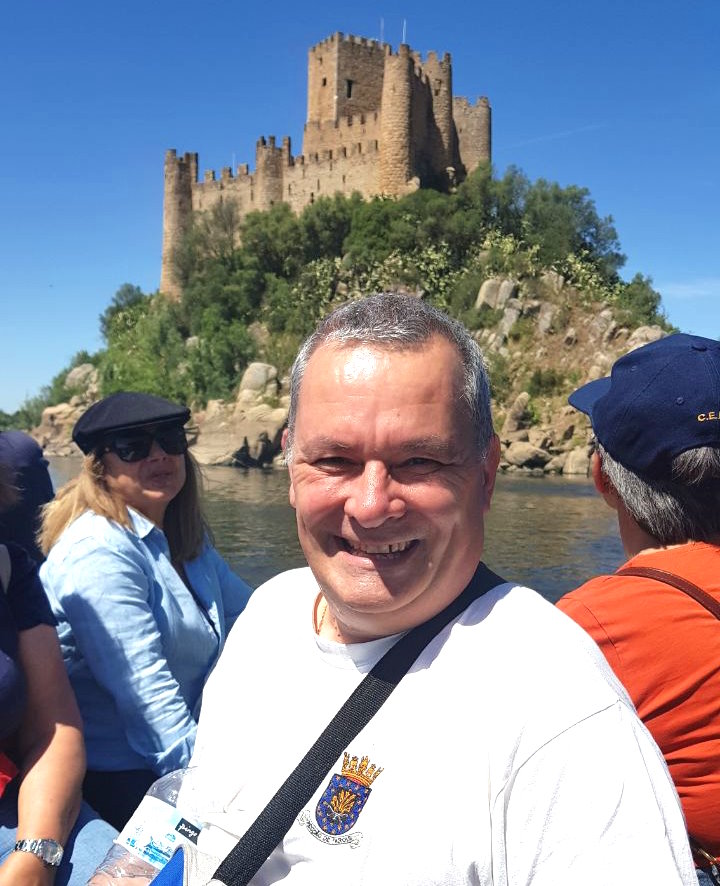
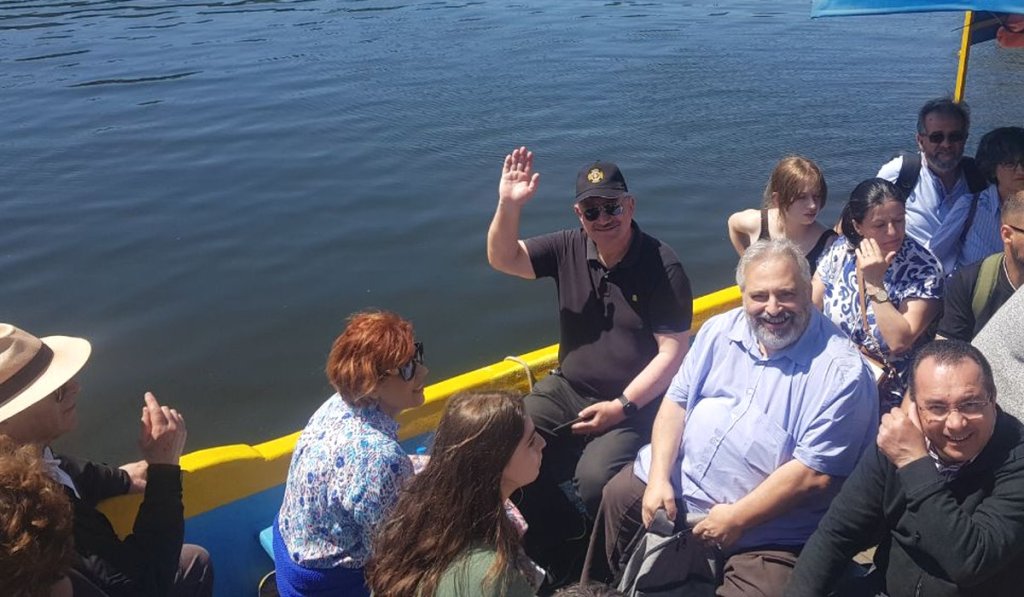
De seguida o numeroso grupo dirigiu-se ao cais de Almourol, onde apanhou a embarcação que o levou à ilha emblemática. O dia estava magnífico, com um glorioso céu azul, sem nuvens e uma temperatura muito agradável.
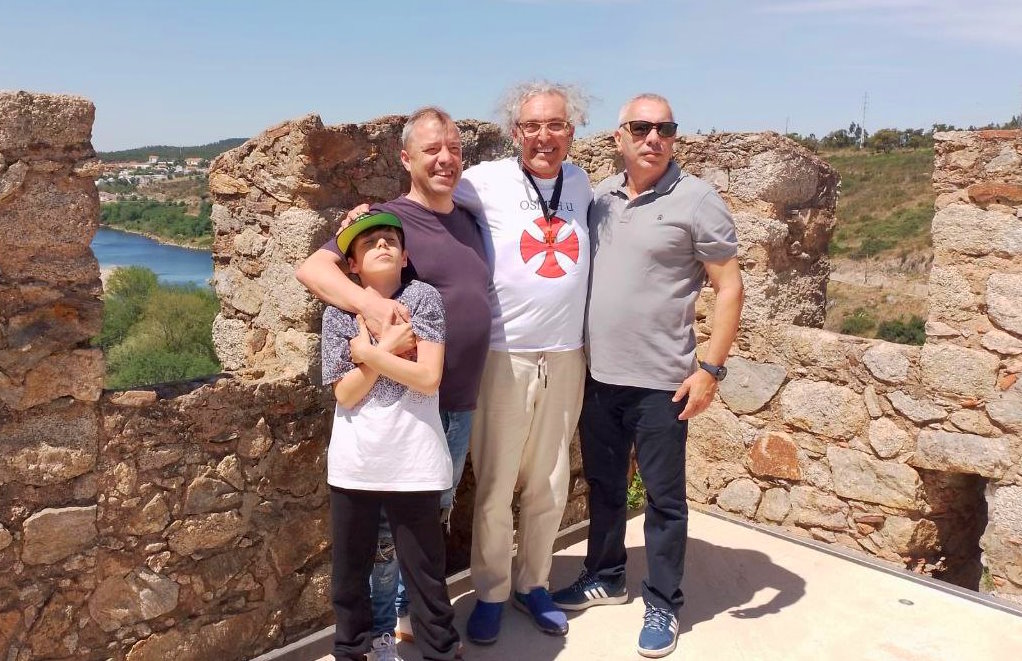
A escalada é difícil – afinal é um castelo defensivo Templário com centenas de anos! – mas muitos chegaram ao topo da Torre de Menagem de onde se desfruta uma vista impressionante do rio Tejo e das suas margens.
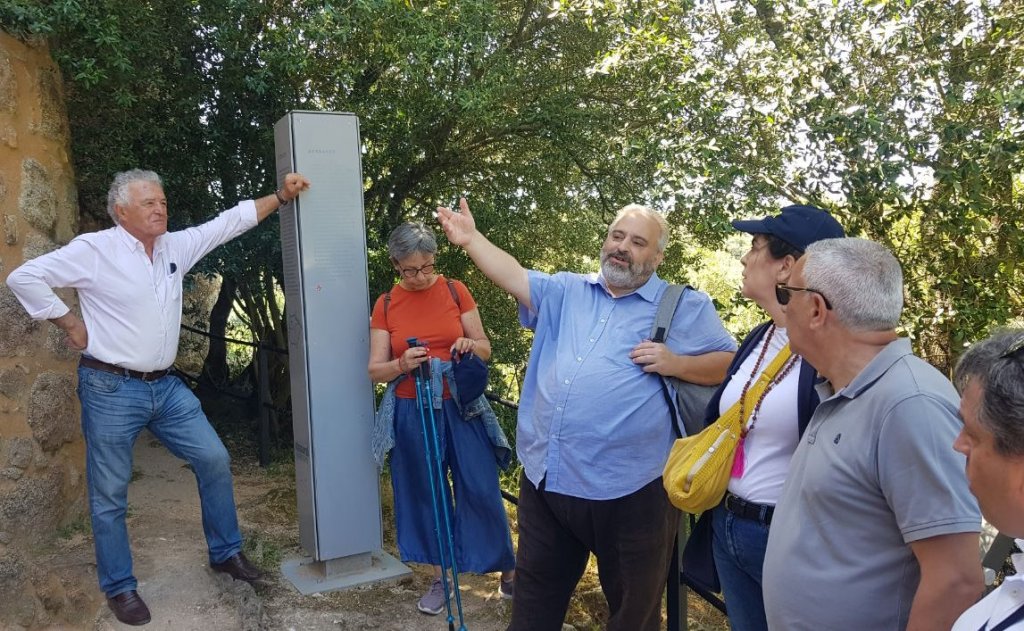
Já na cidade de Tomar o grupo fez uma visita à igreja de São João Baptista, recentemente restaurada, onde alguns dos detalhes mais surpreendentes foram destacados e explicados.
No largo, frente à Câmara Municipal, falou-se um pouco do impressionante percurso de Gualdim Pais, o mais influente e conhecido Mestre do Templo em Portugal, cuja obra inclui a fundação do Castelo de Tomar em 1160 e de Almourol em 1771.
Seguiu-se o almoço, de tom medieval, na Taverna Antiga de Tomar, onde o mais saudável convívio fraternal ajudou a preparar uma tarde de passeio. Dali, o grupo seguiu para a igreja de Santa Maria do Olival, mais um importante marco religioso da presença Templária na região. Assim se concluiu um dia maravilhoso em que a história da Ordem do Templo e a sua memória serviram de inspiração para três dezenas de peregrinos ao país do Templo.
Outras visitas estão em preparação para breve.
Info: templi@seculartempli.org
[ENGLISH]
This Sunday, April 30, 2023, a study visit was organized by the Portuguese members of OSMTHU – Secular Templi. Guided by the Grand Prior of Portugal and Chancellor of the Order, F+ Luis de Matos, the visit began at the Templar Interpretation Center of Vila Nova da Barquinha, where the entire Templar context of the geographical area visited was, explained. In addition to the Center, a work supported by the Order and by the Templar Corps International, a short visit was made to the Library dedicated to the Templar theme, inviting all those present to make donations in value and material in order to expand this equipment of international reference.
Then the large group headed to the Almourol pier, where they borded the boat that took them to the emblematic island. The weather was magnificent, with a glorious blue sky, without clouds and a very pleasant temperature. The climb is tough – it is a Templar defensive castle hundreds of years old after all! – but many reached the top of the Tower from where you can enjoy an impressive view of the Tagus River and its banks.
Once in the city of Tomar, the group visited the church of São João Baptista, recently restored, where some of the most surprising details were highlighted and explained. In the square, in front of the Town Hall, the Prior talked about the impressive career of Gualdim Pais, the most influential and well-known Master of the Temple in Portugal, whose work includes the founding of the Castle of Tomar in 1160 and of Almourol in 1771.
This was followed by lunch, in a medieval style, at Taverna Antiga de Tomar, where the healthiest fraternal interaction helped to prepare the afternoon.
From there, the group headed to the church of Santa Maria do Olival, another important religious landmark of the Templar presence in the region. Thus ended a wonderful day in which the history of the Order of the Temple and its memory served as an inspiration for three dozen pilgrims to the country of the Temple.
Other visits are in preparation for the near future.
In preparation for the eve of Santiago and the commemoration of the Battle of Ourique, the OSMTHU’s Grand Priory of Portugal gathered in General Chapter in the good land of Alentejo, to welcome new brothers and sisters, receive the commitment of service from Squires and arm Knights who demand the Order.
Current Covid19 restrictions prevented many of those who wished to join the work from doing so. However there was a very significant number in attendance, ensuring two days of very fruitful work, in peace, serenity and harmony. Until the end of the year, un the hope for improvements in sanitary conditions, the Order will provide the opportunity for those who were forced not to attend, to resume their journey without delay. Their absence was felt.
As in previous years, we do not want to expose to the public ceremonies that are reserved and contain ritual procedures and moments of study and explanation rooted in the richest Tradition of Spiritual Chivalry, in many cases lost in the fog of collective memory and absent in the Templar inspired movements of the nowadays.
After a morning of remembrance of the precepts of Chivalry according to 13th century sources, in a study session led by the Preceptor of the Grand Priory, João Pedro Silva, KOTJ, there was a convivial lunch that allowed us to catch up on long-awaited conversations. since we had not met since the Ecumenical Journeys of Lagos in February 2020. Since then an intense work of online study has been developed in parallel with some initiatives already fixed in our annual Calendar, as was the case of the Conference on Templars and Templarism in October 2020 and the 2021 Ecumenical Journeys, both in a virtual environment.
The afternoon began with the ritual opening of the National Chapter, during which postulants in the degree of Novice were received and a large group of Novices who had already completed their degree passed to Escudeiro. Some of the Knights present contributed to consolidating the knowledge acquired, promoting the necessary reflection for progress in the understanding of Chivalry. A meditation on the Emmaus Way and its meaning was especially poignant, and the afternoon was completed with a reading of traditional texts, including an oral tradition tale of Chivalry fixated in text in the 12th century in Gascony in France, that always leaves a special mark, in the memory of the Squires.
The preparation work for the night vigil, essential for the armament ceremony, began at the end of Saturday afternoon, with the departure from the Convent in procession through the Alentejo countryside to a fountain where the traditional washings were carried out and the spirit was prepared for the long journey that was still ahead, as the ceremony takes place only on Sunday.
Rui Herdadinha, KCTJ, Commander of Arraiolos , was the kind host of a convivial snack that preceded the ascent to the Castle, a moment of interior silence that marks the end of the clear Alentejo day, with the disappearance of the sun, opening the night period during which, in the darkness and uncertainty of the black night, one proceeds to complete vigil, without abbreviation or subterfuge, in hope and anticipation of the desired dawn.
Little more can be added about what followed. The procession descended from the Castle to the Chapter, which resumed its work and proceeded to clarify many points about Chivalry and the Templars reserved only for the most diligent. In the morning, the armaments were carried out following the traditional Ritual, with the Order being enriched with 4 new Knights and 1 Dame. They are the Brothers Paulo Fernandes, KTJ; Virgílio Gomes, KTJ; Bruno Correia, KTJ; Miguel Pereira, KTJ; and Dame Joana Frade, DTJ. We congratulate them and wish that Chivalry, as a tree of firm trunk and roots, may become green again and bear fruit in them.
The 6th Commandery of the Grand Priory of Portugal was also created, the new Commandery of Lisbon – Sait Cathrin Hill, with Brother Commander João Pedro Silva, KCTJ being invested. Brother João took his oath in the traditional way and will begin work immediately.
Sunday’s work ended in a traditional way with the celebration of the Eucharist by the Grand Prior and Bishop Tau Flammula Veritatis.
The Grand Priory is deeply grateful to all the Brothers and Sisters who worked tirelessly to make the Chapter a success, within the strict health regulations in place at the moment in Portugal. Special mention should be made to Sister Susana Ferreira, DTJ; to Brother Fernando Silva, KTJ who irrepressibly performed the position of Master of Ceremonies; to Brother Filipe Simões, KTJ and to the Commanders Rui Herdadinha, KCTJ; Paulo Valente, KCTJ and Victor Varela Martins, KCTJ as well as all those who participated and contributed to another unforgettable chapter in the history of our Grand Priory. Thank you all.