Realizou-se este Domingo, 30 de Abril de 2023, uma visita de estudo dos membros Portugueses da OSMTHU – Secular Templi. Guiada pelo Grão Prior de Portugal e Chanceler da Ordem, F+ Luis de Matos, a visita iniciou-se no Centro de Interpretação Templário de Vila Nova da Barquinha, onde todo o contexto Templário da zona geográfica visitada foi explicado. Além do Centro, obra apoiada pela Ordem e pelo Templar Corps International, procedeu-se a uma curta visita à Biblioteca dedicada ao tema Templário, convidando-se todos os presentes a fazerem doações em valor e em material para poder ampliar este equipamento de referência internacional.
De seguida o numeroso grupo dirigiu-se ao cais de Almourol, onde apanhou a embarcação que o levou à ilha emblemática. O dia estava magnífico, com um glorioso céu azul, sem nuvens e uma temperatura muito agradável.
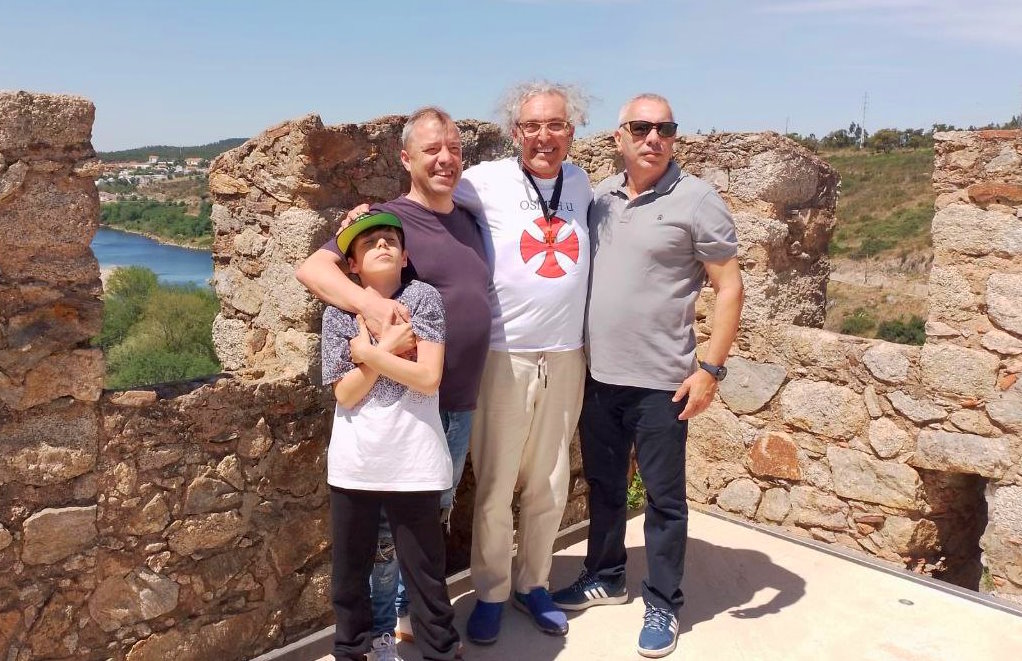
A escalada é difícil – afinal é um castelo defensivo Templário com centenas de anos! – mas muitos chegaram ao topo da Torre de Menagem de onde se desfruta uma vista impressionante do rio Tejo e das suas margens.
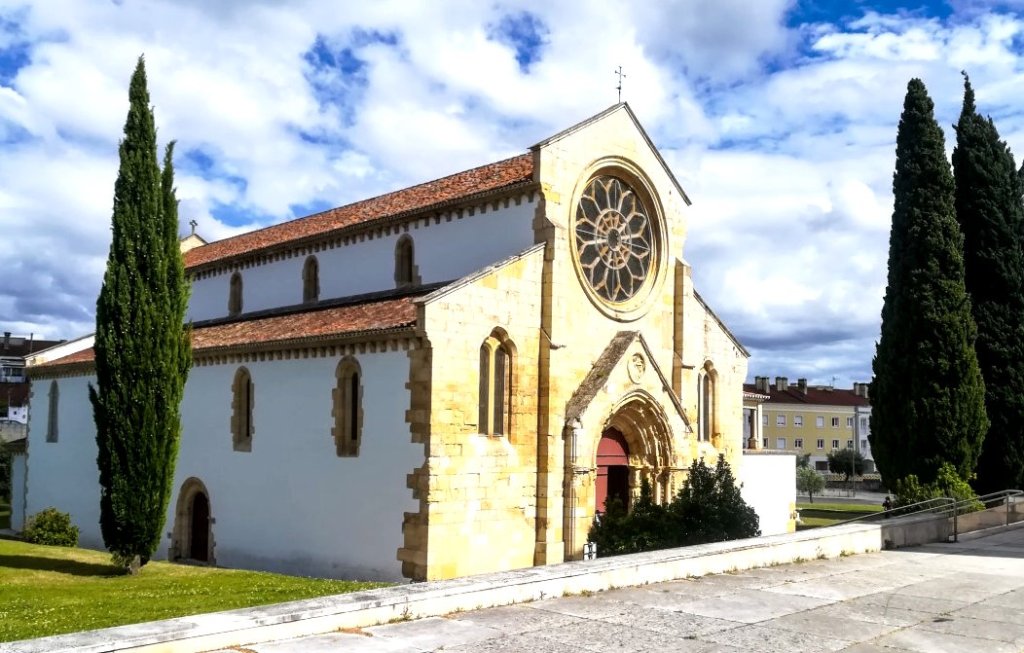
Já na cidade de Tomar o grupo fez uma visita à igreja de São João Baptista, recentemente restaurada, onde alguns dos detalhes mais surpreendentes foram destacados e explicados.
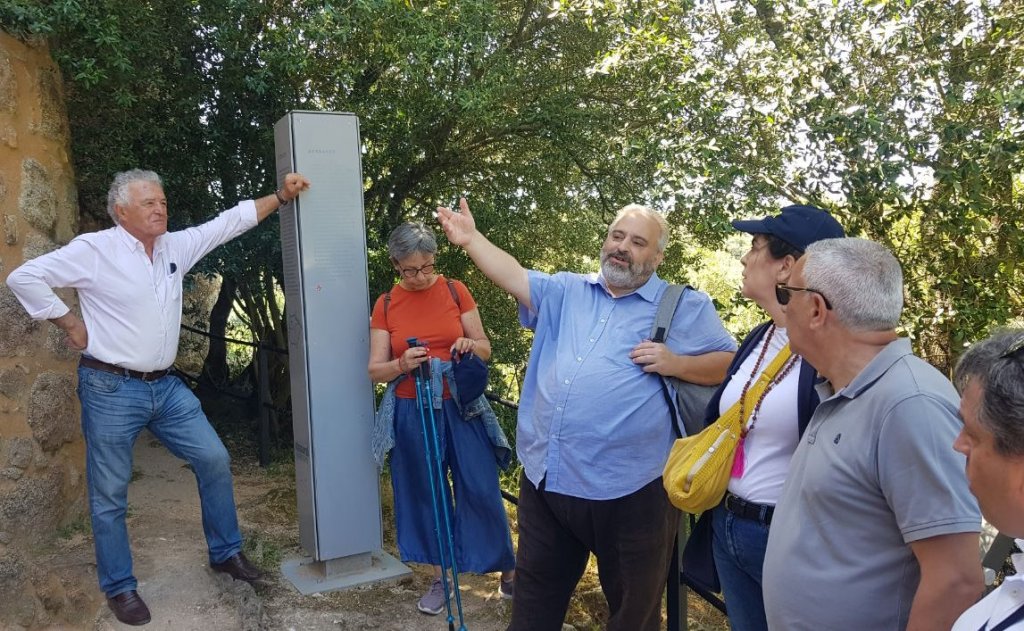
No largo, frente à Câmara Municipal, falou-se um pouco do impressionante percurso de Gualdim Pais, o mais influente e conhecido Mestre do Templo em Portugal, cuja obra inclui a fundação do Castelo de Tomar em 1160 e de Almourol em 1771.
Seguiu-se o almoço, de tom medieval, na Taverna Antiga de Tomar, onde o mais saudável convívio fraternal ajudou a preparar uma tarde de passeio. Dali, o grupo seguiu para a igreja de Santa Maria do Olival, mais um importante marco religioso da presença Templária na região. Assim se concluiu um dia maravilhoso em que a história da Ordem do Templo e a sua memória serviram de inspiração para três dezenas de peregrinos ao país do Templo.
Outras visitas estão em preparação para breve.
Info: templi@seculartempli.org
[ENGLISH]
This Sunday, April 30, 2023, a study visit was organized by the Portuguese members of OSMTHU – Secular Templi. Guided by the Grand Prior of Portugal and Chancellor of the Order, F+ Luis de Matos, the visit began at the Templar Interpretation Center of Vila Nova da Barquinha, where the entire Templar context of the geographical area visited was, explained. In addition to the Center, a work supported by the Order and by the Templar Corps International, a short visit was made to the Library dedicated to the Templar theme, inviting all those present to make donations in value and material in order to expand this equipment of international reference.
Then the large group headed to the Almourol pier, where they borded the boat that took them to the emblematic island. The weather was magnificent, with a glorious blue sky, without clouds and a very pleasant temperature. The climb is tough – it is a Templar defensive castle hundreds of years old after all! – but many reached the top of the Tower from where you can enjoy an impressive view of the Tagus River and its banks.
Once in the city of Tomar, the group visited the church of São João Baptista, recently restored, where some of the most surprising details were highlighted and explained. In the square, in front of the Town Hall, the Prior talked about the impressive career of Gualdim Pais, the most influential and well-known Master of the Temple in Portugal, whose work includes the founding of the Castle of Tomar in 1160 and of Almourol in 1771.
This was followed by lunch, in a medieval style, at Taverna Antiga de Tomar, where the healthiest fraternal interaction helped to prepare the afternoon.
From there, the group headed to the church of Santa Maria do Olival, another important religious landmark of the Templar presence in the region. Thus ended a wonderful day in which the history of the Order of the Temple and its memory served as an inspiration for three dozen pilgrims to the country of the Temple.
Other visits are in preparation for the near future.
OSMTHU Commander of Arraiolos, Fr+ Rui Herdadinha, has traveled this week to Guine Bissau on personal business but also on an official Templar Corps mission.
Following the success of the Cape Verde mission by Templar Corps Vice-National Commander Portugal Jorge Amador (see more details here and here), the Templar Corps has prepared an ambitious program that aims to deploy equipment, train and certify local first responders, firefighters and paramedics in Portuguese speaking African countries.
“It’s very important that we contribute with this knowledge transfer”, says Commander Herdadinha; “Portugal has a very long and friendly relationship with these young nations, where we find a friend on every corner. For one, the hospitality and kindness of the people of Guine Bissau is unsurpassed. We should do our best to help them develop their skills in every sector. The Templar Corps is especially interested in Humanitarian work.”
“Our training follows European standards and certifications”, explains Vice-National Commander Amador; “Our aim is to create local teams, ready to respond to crisis situations, be it urban fires, basic life support or natural disasters. The era of big international heavy NGO’s is coming to an end. We need to train smaller teams, give then good equipment and help them to be ready to cope with uncertainty and disaster, because when something extreme happens, they are the first ones on the ground. Always”.
The Templar Corps International (templarcorps.org) is the largest Humanitarian Organization composed of men and women with an interest in the historical Templar Order and their values of Chivalry and Altruism. It has members in over 25 countries.
Firefighters of the Boa Vista municipality in Cape Verde that had been involved last month in the Training and Certification operations lead by Jorge Amador of the Templar Corps Portugal were called to action two days ago to combat a dangerous urban fire at the industrial park. See the video bellow.
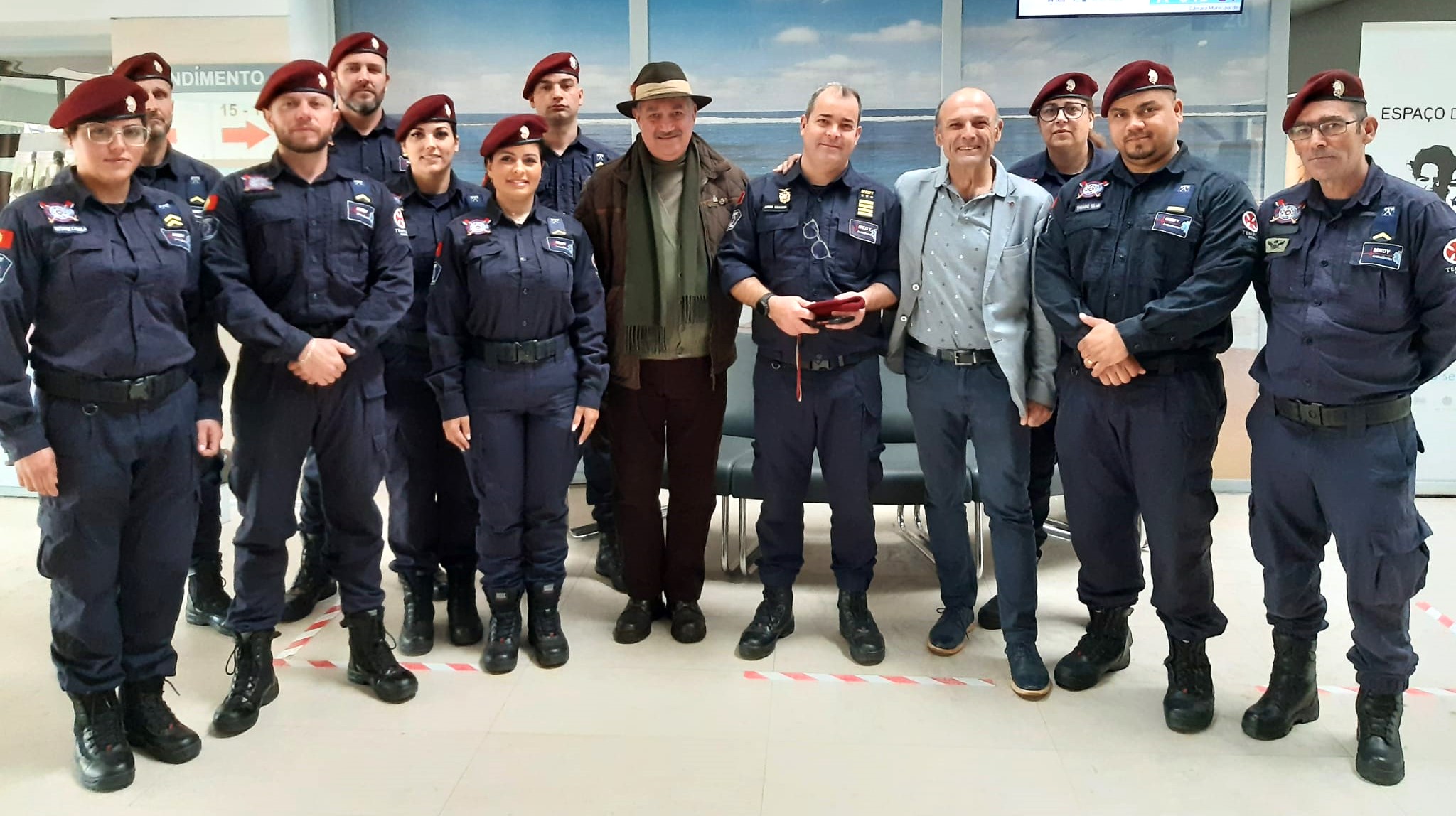
Jorge Amador, Knight Captain and Vice-National Commander Relief/Humanitarian Efforts of the Templar Corps unit from the Algarve, Portugal, lead the team that conducted a one week long Training program for the Boa Vista Municipality in Cape Verde.
A total of 27 trainees, including Municipal Firefighters, Red Cross and volunteers, completed the training in approaching trauma victims and basic life support with AED (Automated External Defibrillator) in the city of Sal-Rei.
The training took place between the 21st and 24th of March and was given by Jorge Amador from “Medy Ambulâncias” and Vice-National Commander Relief/Humanitarian Efforts of the Templar Corps, and Vitor Brito, Fire Chief of Montijo, Portugal.
“We are now more capable”, said Danilson Gonçalves, responsible for the Municipal Firefighters, referring to the importance of training to acquire more knowledge and be better prepared to serve the population.
The Councilor for Civil Protection of the Boa Vista City Council, João Mendes, highlighted that the training will allow firefighters to be better prepared for emergencies, while the municipality will continue to reinforce the capacity of firefighters to intervene and provide conditions to respond to situations of emergency.
The 704th anniversary of the Papal Bull promulgating the Order of Christ – the 1319 Portuguese metamorphosis of the Order of the Temple – was celebrated by the Secular branch of the OSMTHU with the reception of nine new Knights. The ceremony took place at the Church of the Castro Marim castle, first seat of the Order of Christ, that served as headquarters for almost half a century before returning to Tomar, the emblematic Templar City of Portugal.
The celebrations started with a public debate on March 14, at the Medieval Tavern in Castro Marim. The Grand Prior of Portugal OSMTHU, Fr+ Luis de Matos, addressed some of the most controversial claims about the founding of the Tamplar Order, explaining how the main focus had always been mainland Europe where the Provinces of the Order ruled over vast territories in full autonomy of King and local Clergy.
Military operations in the Holy Land where conducted by the Outremére Province and, although the Master was elected there, very close to the Eastern border, operations of the Western Crusade (later called Reconquista, in the Iberian Peninsula) were so important to the Order, that some exceptional privileges were granted by the Pope and Iberian Kings. This would prove to be crucial when Philip IV arrested Templars in France and unsuccessfully tried to make other kingdoms follow him.
Many of those present were interested in discussing the role os Castro Marim as the first headquarters of the Order of Christ, as well and the transition period between the Temple and the new Order. In a poetic moment, Fr+ Bruno Correia, Preceptor of Castro Marim, read the definition of the acclaimed poet Fernando Pessoa (b. 1888, d. 1935) for the Order of Christ. Having been extinct in 1834, along all other religious Orders in Portugal, the questions related to possible survival of the Order were discussed with enthusiasm.
The proceedings on Saturday started early in the morning, with a final address from the Grand Prior to the postulants. The three previous Instruction meetings were summarized and a final synthesis about the Order, Chivalry and what a Knight should study and bring to the world was made.
The Preceptory invited the Postulants and family to lunch at the headquarters of the Banda Musical Castromarinense. It was a precious moment of fun and fraternal friendship that preceded the afternoon ceremonies.
In the afternoon all reunited in the courtyard in front of the Church, inside the tall walls of the Castle. The interior had been duly prepared and decorated for the ceremony. The present Church building dates from the 16th century, although the foundations go back to the 12th century, originally dedicated to Saint John and later rededicated to Saint James. By the 16th century, three images were present tat the altar, according to “Visitation” reports found in the National Archives: Saint James, Saint John and Saint Sebastian, the latter having been recently added. Saint Sebastian iconography is very significant and would later be intertwined with the myth of King Sebastian, lost in Battle that would one day return, mounted on a shiny white horse.
There was an inner circle of Postulants, Knights and Dames from both branches of the Order. Around them the invited guests had their seats, bearing witness of how Chivalry is transmitted. You could hear a pin drop, so attentive and focused were the invited guests.
The Grand Prior read a few paragraphs on the subject of Templar legacy, explaining how and why the medieval organization had its period of manifestation and cannot be brought back to existence from the same dead body. He stressed however that the Order is not perishable by fire and that Philip IV was unable to suppress it. “The light that shone in Jerusalem that very day the Templars gathered around the same lamp to pray for the first time, is the same light that guides the Order today”, he said.
Each of the postulants was called by name and kneeled to proclaim their public commitment. Then the Grand Prior armed them by following the traditional ritual, using the sword and words in gesture and speech that have hundreds of years. The Commander of Lagos, Fr+ Victor Varela Martins, dressed the new Knights with their mantle, giving them the sword, certificate and the “Liber Novitius” the book published by the Grand Preceptory of the Order where all the historical information is referenced and explained, including the Primitive Rule.
The Proceedings of the Day closed with the congregation singing the Non Nobis. It was a joyful day for the Order, with nine new Secular Knights. They are B+ Luis Velez, B+ Luís Moutinho, B+ Luís Matos, B+ Nuno Moreira, B+ Carlos Carmo, B+ Amadeu Silvestre, B+ José Elias, B+ António Santos Rosa e B+ Jorge Santos.
The evening was crowned with a convivial Medieval Dinner, that included a live performance of medieval music, Troubadour songs and some beautiful pieces from Al-Andaluz and Sufi tradition.
The Order can be contacted by email: templi@seculartempli.org
PORTUGUESE TEXT
O 704º aniversário da Bula Papal que promulgou a Ordem de Cristo – a metamorfose portuguesa de 1319 da Ordem do Templo – foi celebrado pelo Ramo Secular da OSMTHU com a recepção de nove novos Cavaleiros. A cerimónia decorreu na Igreja do castelo de Castro Marim, primeira sede da Ordem de Cristo, que serviu de assento durante quase meio século antes de regressar a Tomar, a emblemática Cidade Templária de Portugal.
As comemorações começaram com um debate público no dia 14 de março, na Taberna Medieval de Castro Marim. O Grão Prior de Portugal OSMTHU, F+ Luís de Matos, abordou algumas das teses mais controversas sobre a fundação da Ordem dos Tamplários, explicando como o foco principal sempre foi a Europa continental onde as Províncias da Ordem governavam vastos territórios em total autonomia de Rei e Clero local. As operações militares na Terra Santa foram conduzidas pela Província de Ultramar e, embora o Mestre fosse aí eleito, muito perto da fronteira oriental, as operações da Cruzada Ocidental (mais tarde denominada Reconquista, na Península Ibérica) foram tão importantes para a Ordem, que alguns privilégios excepcionais foram concedidos pelo Papa e pelos Reis Ibéricos. Isso seria crucial à época em que Filipe IV prendeu os Templários na França e tentou, sem sucesso, fazer com que outros reinos o seguissem.
Muitos dos presentes mostraram-se interessados em discutir o papel de Castro Marim enquanto primeira sede da Ordem de Cristo, bem como o período de transição entre o Templo e a nova Ordem. Num momento poético, o F+ Bruno Correia, Preceptor de Castro Marim, leu a definição do aclamado poeta Fernando Pessoa (n. 1888, d. 1935) para a Ordem de Cristo. Extinta em 1834, juntamente com todas as outras Ordens religiosas em Portugal, as questões relativas à eventual sobrevivência da Ordem foram de seguida discutidas com entusiasmo.
Os trabalhos de sábado começaram no início da manhã, com o discurso final do Grão Prior aos postulantes. Foram resumidas as três reuniões de Instrução anteriores e feita uma síntese final sobre a Ordem, a Cavalaria e o que um Cavaleiro deve estudar e trazer ao mundo.
A Preceptoria convidou os Postulantes e familiares para um almoço na sede da Banda Musical Castromarinense. Foi um precioso momento de diversão e amizade fraterna que antecedeu as cerimónias da tarde.
À tarde, todos se reuniram no pátio em frente à Igreja, dentro das altas muralhas do Castelo. O interior foi devidamente preparado e decorado para a cerimónia. O actual edifício da Igreja data do século XVI, embora as fundações remontem ao século XII, sendo originalmente dedicada a São João e depois rededicada a São Tiago. No século XVI, três imagens estavam presentes no altar, segundo relatórios de “Visitação” encontrados no Arquivo Nacional: São Tiago, São João e São Sebastião, este último tendo sido acrescentado havia pouco tempo. A iconografia de São Sebastião é muito significativa e mais tarde entroncaria no mito de El-Rei D. Sebastião, desaparecido em Batalha e que um dia retornaria, montado em um cavalo branco reluzente.
Na igreja havia um círculo interno de Postulantes, Cavaleiros e Damas de ambos os ramos da Ordem. À sua volta sentaram-se os convidados, testemunhando como se transmite a Cavalaria. Podia ouvir-se um alfinete cair, de tão atentos e concentrados estavam os convidados.
O Grão Prior leu alguns parágrafos sobre o tema do legado Templário, explicando como e por quê a organização medieval teve seu período de manifestação e não pode ser trazida de volta à existência a partir do mesmo cadáver. Enfatizou, no entanto, que a Ordem não é perecível pelo fogo e que Filipe IV não foi capaz de suprimi-la. “A luz que brilhou em Jerusalém naquele mesmo dia em que os Templários se reuniram em torno de uma lâmpada para rezar pela primeira vez, é a mesma luz que hoje guia a Ordem”, afirmou.
Cada um dos postulantes foi chamado pelo nome e ajoelhou-se para proclamar o seu compromisso público.
Então o Grão-Prior armou-os, seguindo o ritual tradicional, usando a espada e palavras, gestos e falas que têm centenas de anos. O Comendador de Lagos, F+ Victor Varela Martins, vestiu os novos Cavaleiros com o seu manto, entregando-lhes a espada, certificado e o “Liber Novitius” livro editado pela Grande Preceptoria da Ordem onde toda a informação histórica é referenciada e explicada, incluindo a Regra Primitiva.
Os procedimentos do Dia encerraram com o canto do Non Nobis. Foi um dia de alegria para a Ordem, com nove novos Cavaleiros Seculares. São eles os I+ Luis Velez, I+ Luís Moutinho, I+ Luís Matos, I+ Nuno Moreira, I+ Carlos Carmo, I+ Amadeu Silvestre, I+ José Elias, I+ António Santos Rosa e I+ Jorge Santos.
A noite foi coroada com um Jantar Medieval de convívio, que incluiu uma actuação ao vivo de música medieval, com canções trovadorescas e algumas belas peças da tradição Al-Andaluz e Sufi.
A Ordem pode ser contactada pelo e-mail: templi@seculartempli.org
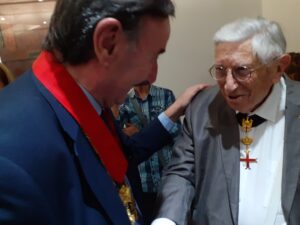
It’s with great sadness that we receive news of the passing of H.E. Nicolas Haimovici-Hastier, Regent of the OSMTJ. Brother Haimovici was one of the most influential and long-lasting leaders of the Order, active until his last days. He was 96 years old.
Fr. Haimovici had a long history with the OSMTHU, dating back to the early 90’s. In 2019 he signed a Cultural Exchange Agreement and later in the year he headlined with Master Antonio Paris the International Conference of Almourol on the Templars and Templarism.
The OSMTHU, our Magisterial Council and Master Antonio Paris express our pain in the passing of Fr. Haimovici and would like to extend out sympathy to his family and the OSMTJ.
The best way to celebrate his remarkable life is to hear on of his last public appearances.
The 2023 Class of our Academy with the Foundation Course and Certification Course was announced and will start on May 3, 2023. The Courses will be available in Portuguese and English.
The Templar Corps is a way of unifying all Brothers and Sisters under one Umbrella. Being together gives us the opportunity to communicate and exchange our thoughts and experiences. What the CEO of Templar Corps did was a great thing to give all Templars this unique opportunity.
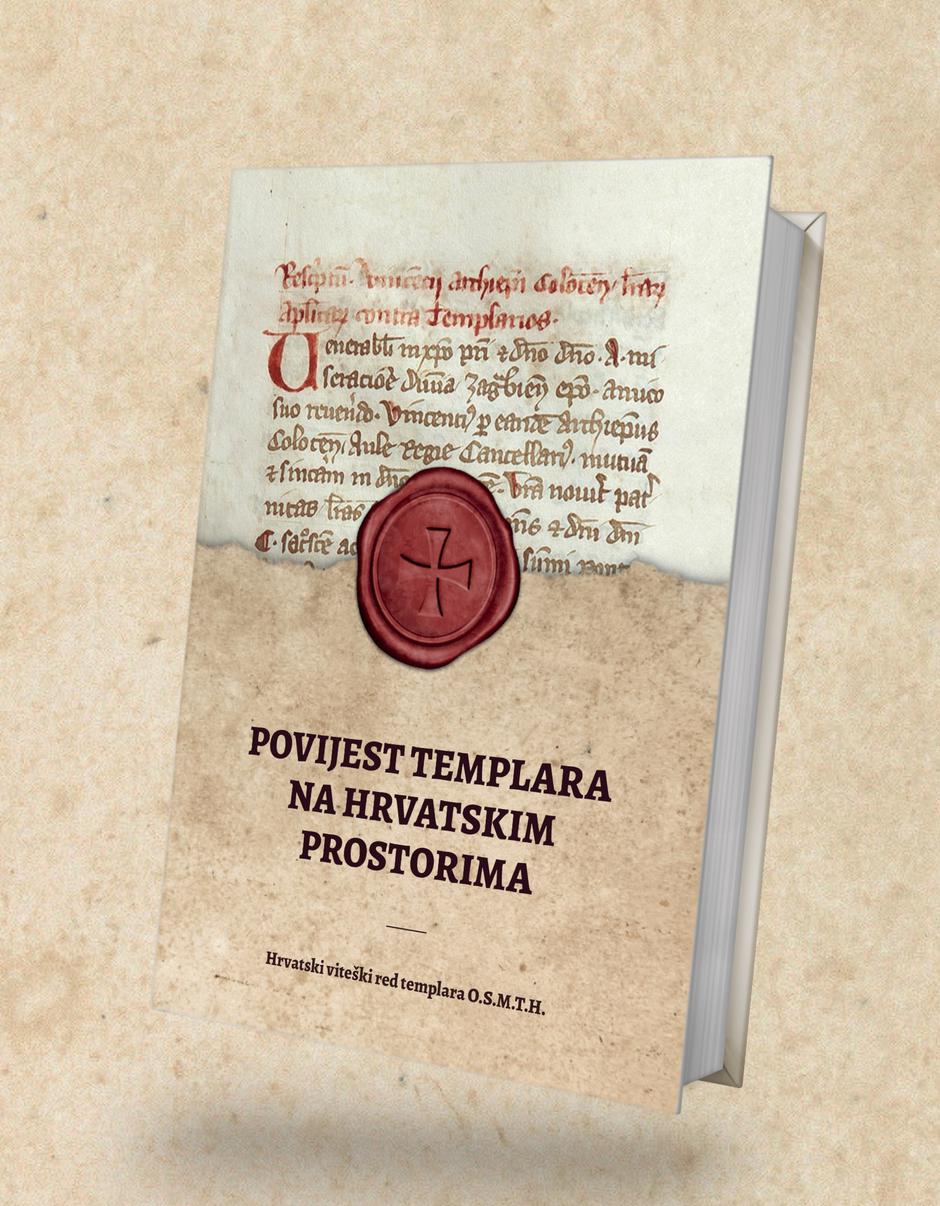
The first contemporary monograph dedicated to the Knights Templar in Croatia was solemnly presented at the Trakošćan Castle, entitled “Templar Heritage in Croatia”, a project carried out by the Croatian Knights Templar.
A number of Croatian scientists have been working on this issue for years. The Templars are one of the most important knightly orders that emerged in the Middle Ages. Breaking Mysticism and Taboos they represented a special form of religious community, embodying two ideals of medieval man – devotion to God in religious life and the virtues of chivalry. Their history has attracted the attention of both scientific circles and the general public from the Middle Ages to the present day. The way in which the order disappeared or was destroyed also played an important role, and this led to the emergence of various myths and stories related to the Templars.
That is why this book presents in a scientifically based way the development and history of this order, both in general and in the Hungarian-Croatian Kingdom, and its cultural and historical heritage in Croatian lands, discovered by archaeological research. In addition, it points to the importance of nurturing Templar traditions in modern society – said the book’s editor, Ph.D. Marija Karbić, scientific advisor at the Croatian Institute of History. The reviewer prof.dr.sc. spoke about the importance of this publishing venture. Ivan Jurković from the Faculty of Philosophy, Juraj Dobrila University in Pula, who emphasized the importance of scientific facts in breaking mysticism, taboos, but also fiction about this mysterious order.
Dr. sc. Juraj Belaj from the Institute of Archeology, who wrote a chapter dedicated to archaeological finds related to the Templar heritage, stressed that throughout Croatia there are remnants of the rich Templar heritage that has yet to be valued and revealed to the local and European public. Namely, Croatia has a centuries-old Templar tradition, which is quite unknown to the general public. That is why Dr. sc. Damir Karbić, director of the Department of Historical Sciences of the Croatian Academy of Sciences and Arts, warned of the importance of rare preserved sources related to the activities of the Templars in Croatia, emphasizing the HAZU archive. In addition to the collected material, original scientific works of leading Croatian historians and scientists dealing with this issue have been made, as well as new maps that “draw” Croatia on the Templar map of Europe.
The Knights Templar, their work and heritage are certainly one of the most intriguing topics of popular culture and arouse public interest. However, too little is known about how Croatia, thanks to its Templar heritage, secured an important place on the map of Europe in the Middle Ages.
Templar forts, churches and chapels sprang up all over the then Croatian lands…
On their way to the Holy Land, European Templars met and stayed in Croatia. And when they were banned in Europe under the pressure of French King Philip, thanks to the then Bishop of Zagreb, today’s Blessed Augustine Kazotic, Zagreb gave them refuge in what today is Nova Ves. Croatia became their last legal refuge after persecution in France – said university professor Bozo Skoko, who published a chapter on contemporary Templar heritage in Croatia and the world in a monograph with professor and communicologist Ivan Tanta. A memorial plaque at the beginning of the street, which was unveiled in 2019, testifies to Nova Ves as the last European legal refuge in Europe.
Croatia has a centuries-old Templar tradition, which is quite unknown to the general public. There are remnants of the rich Templar heritage throughout Croatia that has yet to be valued and revealed to the local and European public, in which interest in this mystical religious knightly order is constantly growing. That is why the Croatian Knights Templar, associations and fraternities, initiated the publication of the first modern monograph dealing with this topic.
The monograph was published with the support of the Adris Foundation and the support of the Templar Corps International.
Conference and Ceremony
On the following day the Grand Prior of Croatia, Fr+ Lovro Tomašinec was installed in Office by the representatives of the Magisterial Council of the OSMTHU in a ceremony that took place in the beautiful medieval Chapel.
A procedure of elections was announced for the OSMTJ, that will take place this month of April. Since the procedure comes as a consequence of an illegitimate attempt made in 2020, if you wish to understand the details and how normalcy is restored, please do read the ANNOUNCEMENT made by the Independent Auditor that was invited to oversee the Election.