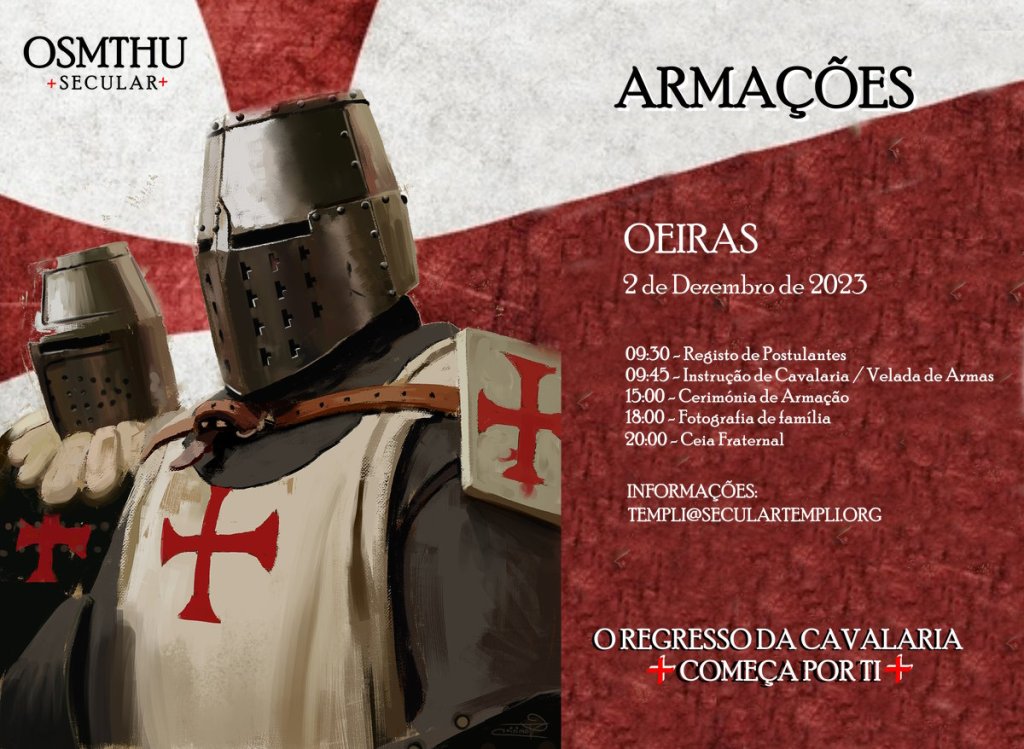
O Ramo Secular da OSMTHU – Ordem do Templo [Secular Templi] cresceu este inverno, integrando mais uma dezena de novos Cavaleiros. A Milícia Espiritual reuniu-se na igreja do Palácio do Marquês de Pombal em Oeiras no dia 2 de Dezembro, para celebrar a fraternidade e passar as chaves da Cavalaria a mais alguns digníssimos Irmãos.
A manhã foi preenchida pela Instrução de Cavalaria e Velada de Armas. Os postulantes tiveram a oportunidade de ouvir as palavras tradicionais com que a Ordem preparava os seus candidatos. Foi descrito o que seria um dia completo numa Comenda do Templo antes da Armação. De seguida o grupo pôde tirar dúvidas e explorar alguns assuntos que escaparam durante o período prévio de 3 meses de formação online. A manhã terminou num indisfarçável ambiente de alegra antecipação para as cerimónias que se iriam seguir. Um almoço fraternal retemperou os corações.
Pela tarde a igreja encheu-se com os familiares dos candidatos, os Irmãos da Ordem e alguns convidados. Uma vez todos nos seus lugares, deu-se entrada ao cortejo do Irmãos e ao Grão Prior, que abriu o Capítulo. Dada uma curta explicação sobre a natureza da cerimónia – uma Armação, sublinhou – justificou ainda o motivo de ser um acto aberto em que as famílias e convidados podem participar. Antecipou que a Ordem tem, adiante, momentos de Cavalaria de carácter mais reservado, que aguardam aqueles que forem mais aplicados, mas que a Armação é um compromisso público em que o Cavaleiro se coloca ao serviço da Ordem tendo por testemunha o público – para o qual passa a ter novas responsabilidades. Não se trata de uma reunião de conjurados, secreta, de homens que juram lealdade entre si, e sim uma cerimónia solene de compromisso para com todos os homens e mulheres do mundo, ao serviço da Ordem e envergando as suas vestes e valores. É um compromisso para todos os dias da vida. Não desvanece quando se arruma a capa no armário. Capa, espada e jóia são meras representações sensíveis de uma nova orientação ética, permanente e imperativa.
Um a um, todos assumiram o seu compromisso. Um a um, frente ao Grão Prior, todos se juntaram à cadeia ininterrupta de Cavalaria.
As cerimónias do dia encerraram com uma emotiva interpretação colectiva do “Non Nobis” na magnífica versão de Patrick Doyle, que ecoou na belíssima igreja barroca oitocentista como uma recordação familiar de outros tempos já passados, mas convocados à actualidade pela Ordem.
Estão de parabéns os novos Cavaleiros António Lourenço, KTJ; Carlos Martins, KTJ; Daniel Gomes, KTJ; Diogo Branco; Erik V, KTJ; Nuno Santos, KTJ; Pedro Fernandes, KTJ; Pedro Miranda, KTJ e Rafael Redondo, KTJ. A Ordem tem para vós muito trabalho, o muito penar e o pão e a água da fraternidade.
“Turismo Histórico Sustentável: Preservar e Abrir é Compatível?”
4 de Novembro, 15h | Online
Participação Gratuita
Pedir link para: conference@templarcorps.org
O Turismo Histórico Sustentável vive de um equilíbrio delicado entre a preservação do património histórico e o seu acesso com qualidade e liberdade por todos os que o buscam. A preservação é essencial para manter viva nossa herança cultural e histórica, permitindo que as futuras gerações desfrutem dela. No entanto, abrir esses locais ao turismo é igualmente importante, pois proporciona uma compreensão mais profunda do passado e impulsiona o desenvolvimento económico. O turismo em massa pode ameaçar todo o ecossistema. A chave estará em adoptar práticas de turismo responsável, minimizando o impacto ambiental e respeitando as comunidades locais. Quem já passou mais de uma hora para comprar um bilhete de acesso a um monumento nacional sabe como este é um debate urgente. Junte-se a nós no próximo Sábado.
Quem nos conhece sabe bem que propósitos nos movem, quem não nos conhece, é a hora de dar atenção ao seu vizinho, ao seu colega de trabalho, ao idoso ou ao casal jovem na sua rua. Pois o que nos move são as famílias que são verdadeiros heróis do quotidiano, que fazem uma engenharia orçamental para alimentar os seus a cada dia e que, no final do mês já pouco resta, mas que apesar de tudo conseguem tem uma palavra agradável, uma oração ao Altíssimo e um sorriso estampado no rosto sofrido. São demasiadas.
É por eles que estabelecemos pontes, que procuramos inspirar outros a fazer o mesmo e mais e melhor!
Há uma semana, a nossa unidade local de Lagos do TemplarCorps foi contactada para ajudar a recolher quase 500kg de alimentos frescos e congelados (carne e peixe), frutas e legumes; de pronto se fez a recolha e no mesmo momento foi contactada a obra social de uma das igrejas locais para que estes bens fossem entregues a quem tenha a necessidade. Esta semana recolhemos mais 400kg de alimentos. Só este mês de Outubro, o Templar Corps no Algarve fez chegar ao Heróis do Quotidiano quase 1 Tonelada de alimentos. É uma gota no oceano. Queremos fazer mais e melhor.
Quem nos contactou não o fez por criarmos uma rede de necessitados à nossa volta mas sim porque identificámos entidades idóneas e de obra notável aos quais é necessário dar a mão e ajudar a cumprirem a sua missão, porque realizamos as missões que nos são imputadas, com dedicação e zelo, porque não retiramos dividendos do bem que ajudamos a concretizar. Quem nos conhece sabe bem que o que o TCI realiza realiza-o por completo.
O TCI cumpre-se quando realiza o seu trabalho de forma discreta, voluntária e expedita. Anunciar a nossa actividade assistencialista serve tão somente para nos responsabilizar a realizar o que temos de realizar, mais e melhor; para dar conta a quem em boa confia de que a missão está cumprida; assim como a inspirar outros a replicar e a ampliar, melhorando.
Que o espírito de voluntariado e de trabalho cooperativo para um mundo melhor possa ser espalhado por todos os corações e que a Cavalaria Templária seja parte do seu impulso.
Para ajudar o Templar Corps entre em contacto connosco em volunteer@templarcorps.org
The weekend of the 13, 14 and 15 of October 2023, the Templar Interpretation Center of Almourol (CITA), Portugal, was host of the IV International Conference on Spiritual Chivalry, Templars and Templarism. For three days, scholars, specialists and the public were able to hear about new research on the Templars and debate a wide range of topics. Four new books were presented, including an expanded reprint of the original catalogue of the 2019 exhibition, that had since been out of print. The Conference is the largest and most prolific international Templar Event.
The Conference started on the evening of Friday 13, with the Mayor of Vila Nova da Barquinha, Fernando Freire, welcoming speakers, the public and members of the OSMTHU, whose Master, António Paris, attended the event. He remembered the date and the imprisonment of the Templars, adding that in 1195 Master Gualdim Pais died in Tomar on the 13 of October as well. Writer and Past CITA Curator Manuel J. Gandra, gave a brief presentation about the Conference and the topics to be discussed in the next couple of days, presenting the reprint of the first catalogue. Master Antonio Paris, who had flown from Rome to attend the event, spoke briefly about the importance of the event and the opportunity of cooperation presented by the fact that several branches of the Order today were invited to como to Almourol and share the knowledge and passion about Templar history and values. On midnight the Grand Priory of Portugal of the OSMTHU conducted a short, but evocative ceremony, in memory of the fallen Templars.
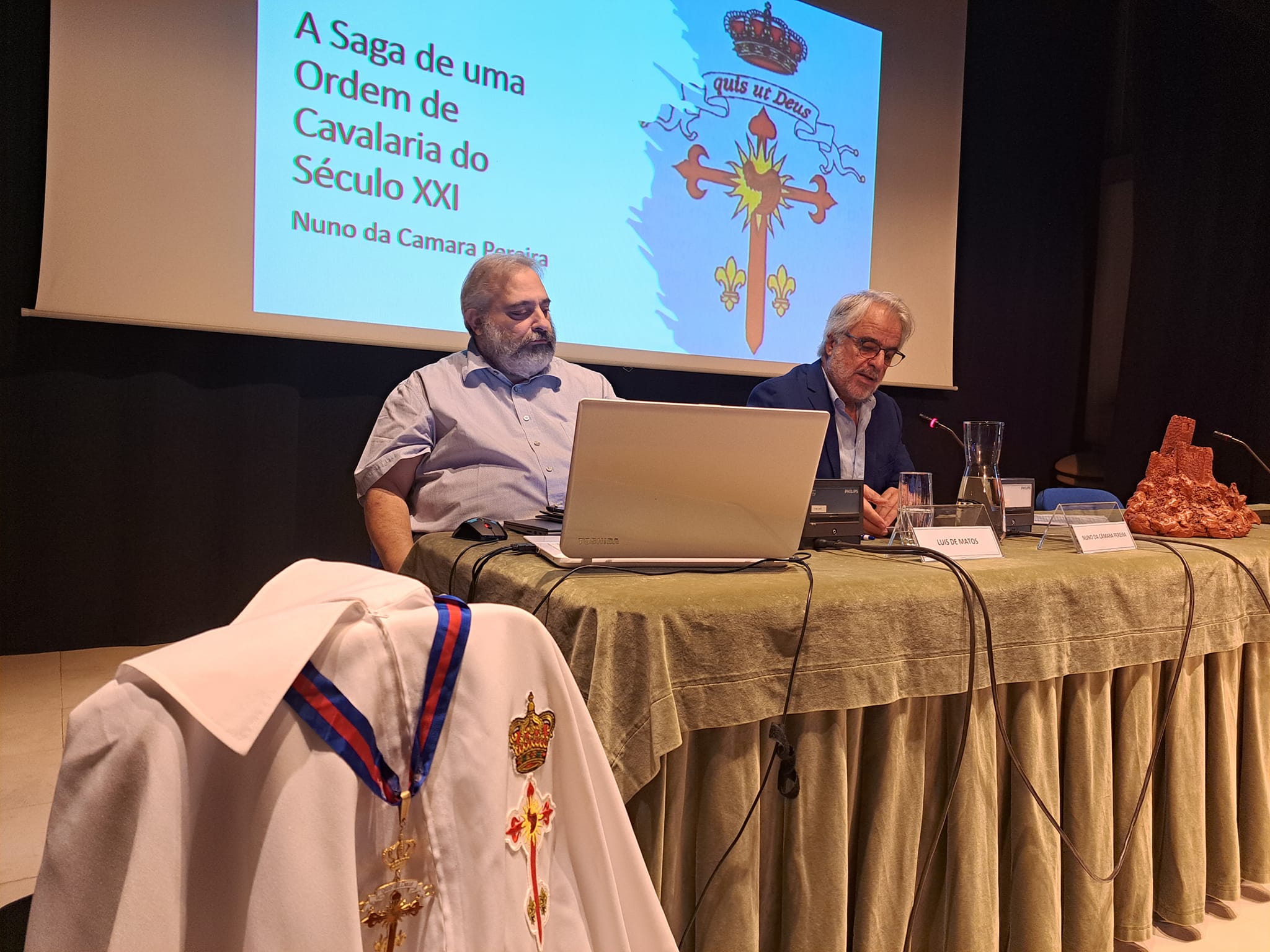
The proceedings started on Saturday, 14 with the presentation by Dom Nuno de Bourbon da Camara Pereira of a paper titled “The Saga of an Order of Chivalry of the 21st Century” about the recent history and court disputes of the Order of the Wing of Saint Michael. Founded in the 12th century by King Afonso Henriques, the Order was revived several times in history and had been in the center of a dispute between Dom Duarte Pio, head of the house of Braganza, and Dom Nuno Bourbon, founder of the last revival of the Order in 1981. The dispute was recently settled out of court, with the mediation of the Archbishop of Evora, resulting the the full reinstatement of rights to Dom Nuno as its Grand Master.
French writer and researcher Remy Boyer followed suit with “Figures of Perceval, archetype of the Knight”, a deep piece on the evolution of Perceval within the Quest, with all his adventures and challenges, a blueprint for Chivalric Initiation. The dichotomy between the Grail and the Spear was explained and the question of “who does the Grail serve?” that had to be formulated by Perceval once he saw both objects during the Fisher Kings banquet, pointed out as one of the symbolic keys of the Quest.
Heraldist David Fernandes da Silva spoke about “Catechesis and Confraternity, Examples and Thoughts”. He explained the role of catechesis as a source of testimony and the chain of tradition for the early communities, projected along the ages, giving some examples related to the Templars, including the “non Nobis…” Psalm and the usage of the patée cross. He then explored the matter of the Templar brothers that were not professed but lived under the rule of the Order in Templar houses. To this level he called the “confraternity” as opposed to the “fraternity” of those who received the ordination.
After lunchtime the Templar Encampment was opened in the courtyard in front of the auditorium. For two days the Tomar Honoris group from Portugal and the Baucan group from Spain staged medieval reconstitutions that included dances, games and the reenactment of sword fight techniques.
The afternoon opened with João Pedro Silva, past Preceptor of the Portuguese Grand Priory, who gave a very detailed view of the procedures against the Templars in France, in his “The Templar Processus”. All the motivations by Philipp, the Fair and his dealings with Bertrand de Got (later Pope Clements V) were outlined. The subsequent fight for domination of the court proceedings between King and Pope, both wanting to be the ones spearheading the events, was explained. The account of the last days of the process and the eventual suspension of the Order was also detailed, giving the audience a vivid account of a subject that is usually wrapped in misinformation and attempts to oversimplify one of the most compelling court procedures of the middle ages.
The day finished with researcher and Associação Saudade’s VP, Virgílio Alves, and his “The Cathars in Portuguese Templar Territories”. In a long and detailed research paper, Virgílio Alves gave the audience the origins, context and history of the Crusade against the Albigensis in the 13th century, focusing then on the escaping Cathars and the help provided by the Order of the Temple, including in escorting a large number of “bons hommes” to the Portuguese region of Castelo Branco, logistical headquarters of the Portuguese Templars.
On the 14th, Sigillum Templi’s president Victor Padilla Nieto from Spain opened the proceedings with his “Tacuinum Sanitatis, and its influence on the Templar Order”. It was a presentation that exposed the influence of the Tacuinum Sanitatis, a set of ancient sanitary rules related to food preparation and health habits, that was fundamental for the Primitive Rule’s prescriptions on hygiene and food on the daily life of the Order.
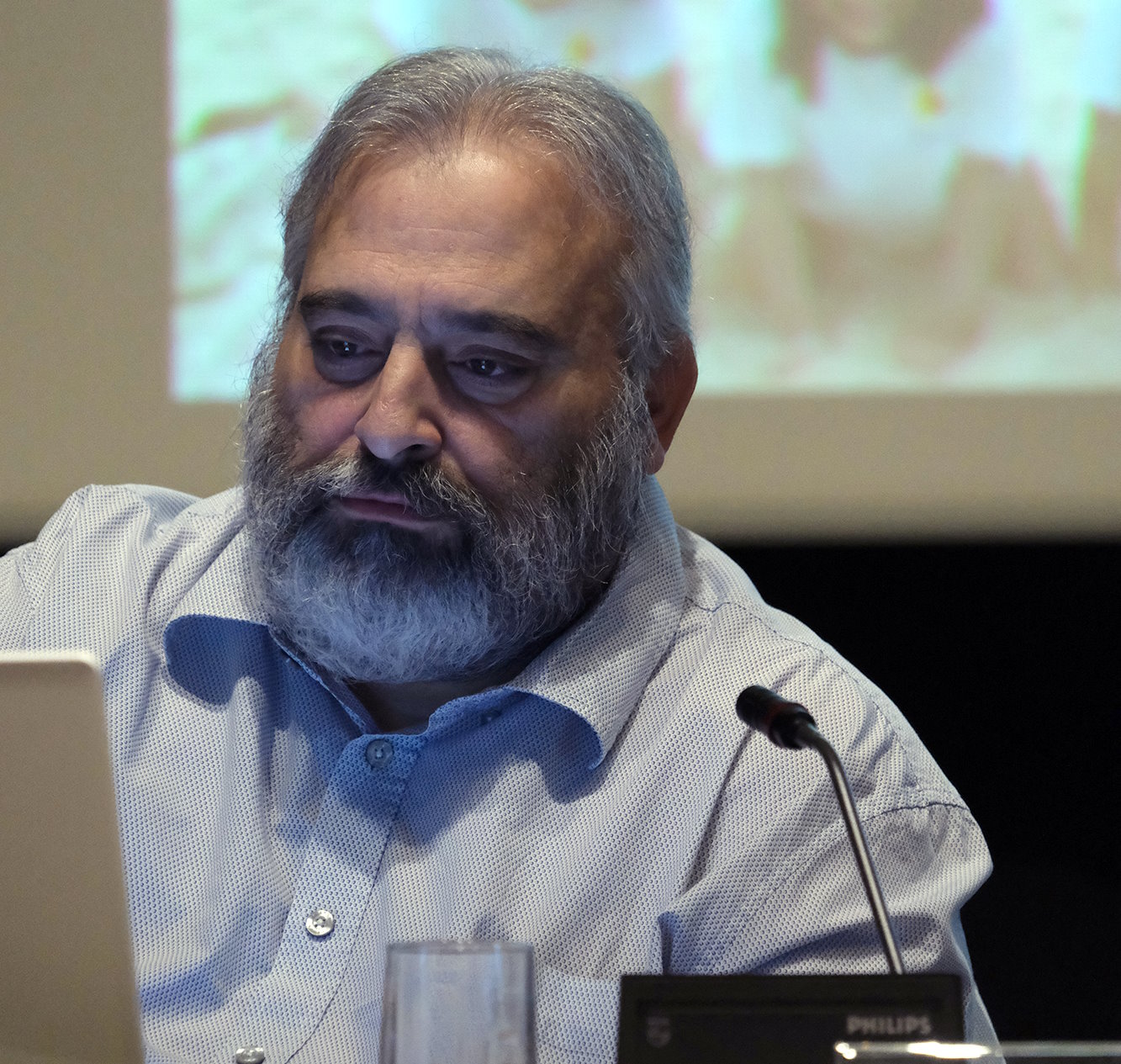
Luis de Matos, International Chancellor of the OSMTHU, spoke next remembering a short passage of the letter of Bernard of Clairvaux to the Templars in which the military actions of the Order are justified by Christs own rage in the Temple (Mathew 23). He then expressed how that passage is also an inspiration when it comes to the state of Templarism in the world today, setting himself apart of the whole movement – that he said to be incapable of defending or representing. He concluded by stating that it’s increasingly difficult and alienating to be a traditionalist in Portugal, giving a few examples of how the authorities mishandle the administration of culture and old Templar monuments in the country.
The last leg of the Conference was opened by Bulgarian Professor Yuri Stoyanov, of SOAS University of London, who offered the paper “The Importance of Russian and Eastern European Museum and Archival Collections for Study of the Historical Knights Templar, Spiritual Chivalry and Templarism”. He traced the importance of many pre-war archival sources on Chivalry and Templarism that were scattered and disappeared after World Wars I and II. Many of these have since surfaced in Russia and Poland and hold critical information on subjects such as the 18th century Swedish (Templar) Rite of Freemasonry, the Order of Malta tradition in Saint Petersburg and the Templar Orders of the early 20 century in Russia.
The Conference was closed by researcher Manuel J. Gandra with his “Did the Templars Profess a Secret Doctrine? Thoughts on a Loaded Topic”. By dismissing right from the start the two main popular references to a secret doctrine in the Order: the Baphomet, the Statutes of Master Roncelinus, Gandra was able to concentrate on the several failed attempts made by revivals of the Order in the 18th and 19th century to be recognized the the Portuguese Order of Christ, as the sole legitimate pure lineage at the time. By studying archeological findings made at the Almourol Castle and architectural iconographic elements still visible in the Convent of Christ – including those of an hermetic and rosecroix background over 100 years older than the German Manifests – Gandra explored some of the canons of a doctrine that is visible and intelligible in Portuguese Templar sources, but unknown to the scholars still today.
Overall, the IV Conference was an absolute success. It was heavily attended, the communications were original, interesting and informative and the conversations that took place during the intervals show great promise for future projects about the Templars. Next year, put it on your calendar: 13 and 14 of October 2024 the destination is Vila Nova da Barquinha / Almourol, Portugal.
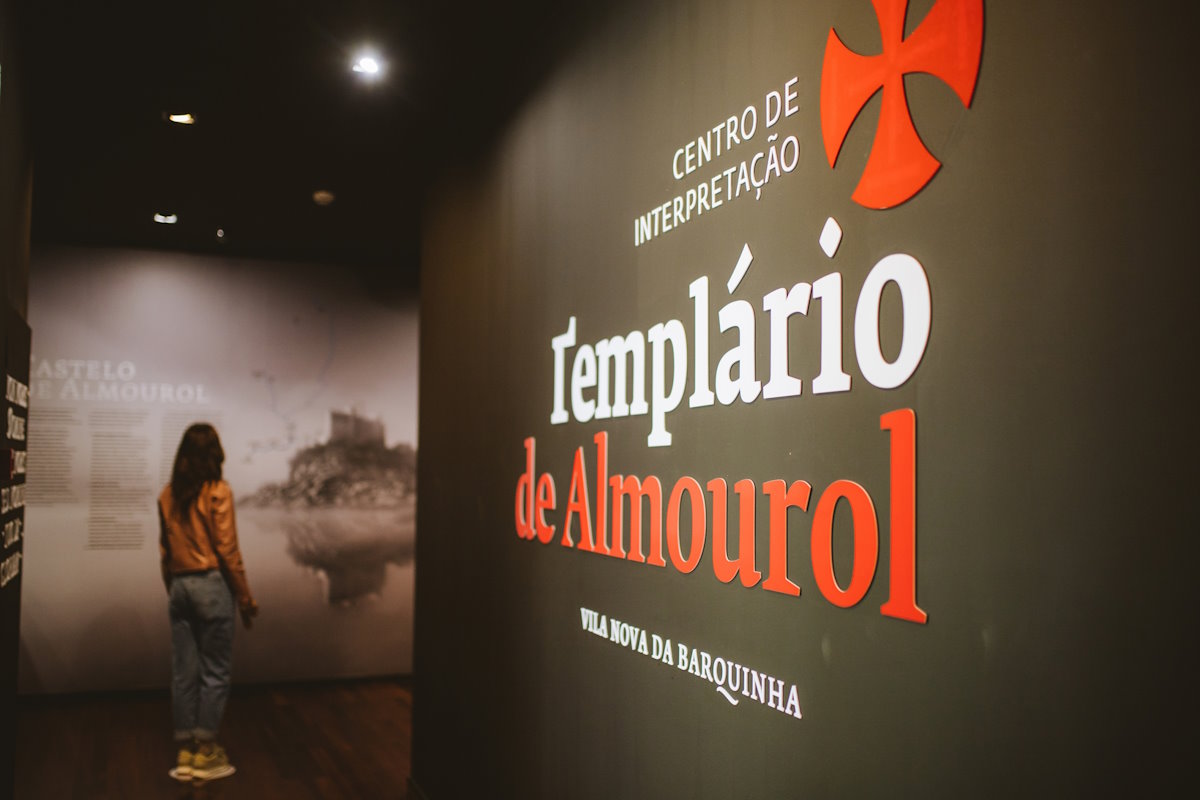
Vila Nova da Barquinha continua a inovar no setor do turismo. Registo, neste particular, para mais uma mais-valia que é colocada à disposição dos turistas – e não só – principalmente para todos quantos, por questões de mobilidade, não podem visitar o Castelo de Almourol. Está, assim, em causa a inauguração de uma sala de visita imersiva, a 360°, nova acessibilidade que agora é realidade no Centro Cultural, precisamente no Posto de Turismo, num edifício que já tem o Centro de Interpretação Templário de Almourol, sem dúvida uma das maiores atrações histórico-culturais do concelho e do Médio Tejo. E foi perante uma atmosfera Templária que Fernando Freire, presidente da Câmara de Vila Nova de Barquinha, abriu a sessão propriamente dita, referindo que a Rota dos Templários se pretende assumir como um produto turístico, reforçando que está em causa um trabalho de equipa. Jorge Simões, segundo secretário da Comunidade Intermunicipal do Médio Tejo, fala da concretização de um trabalho muito importante, mais ainda para pessoas que não conseguem, por meios próprios, visitar o Castelo de Almourol. Pedro Machado, presidente da Entidade do Turismo do Centro de Portugal, também marcou presença e destacou o papel relevante de cada um dos municípios da região, reforçando que Vila Nova da Barquinha tem um conjunto de componentes de ativos diferenciadores. Assista ao vídeo editado pela nossa redação.
Entrevista do Irmão Fr+ Carlos Carmo, KTJ, dono da Taberna Medieval Velho Cavalinho, ao Canal Ayamonte Interesa. Para uma experiência gastronómica e cultural única. Em Castro Marim, junto ao Castelo da Ordem de Cristo.